I was awoken just past midnight with the buzzing notification of my phone as it vibrated off my night stand to the floor below. What could possibly be going on? My thoughts immediately went dark: perhaps somebody was trying to contact me because of an emergency with a friend or family matter. I grab the phone and unlock it quickly, fearing the worst. I see text messages from my friend Cale, that simply stated: 9 Days to Go. It was ominous, but clearly not life threatening - unless he was counting down to something nefarious. I asked for some details, and he responded back with one word:
INTERSTELLAR
Oh yes, the new Christopher Nolan film was coming, and its arrival was quickly upon us. This is a movie that I've been specifically avoiding in the hopes of not receiving spoilers and to keep my first viewing experience as unblemished as possible. The teaser, released quite some time ago, was enough to sell me on the film. The trailers that I was subjected to was giving me a few too many details than I cared for, but I had faith that since Nolan was behind the director's chair, I would be pleasantly surprised by the film regardless.
As I was browsing Reddit, I saw a title along the lines of "What the film reel of Interstaller looks like on 70mm." It was an image, and as I surmised the contents I deemed it safe to click on, so I did. What I was presented with was an image of a gigantic film reel on its side, sitting in a projection room ready to be loaded up. Nearby objects revealed the size of the film, and it was gigantic. I had heard of 70mm projection before, but now it was time to take a look into this. My theories were correct: 70mm is quite a bit larger than a typical film cell, resulting in a dramatic increase in picture quality. In this case, Interstellar was filmed in IMAX, filling the entire 70mm frame in a glory that can only be experienced in two theatres in Ontario. This IMAX experience differs from the mainstay screens you see branded with the IMAX name, in that this 70mm projection would be film, while all others are digital. And those digital projections can't match the resolution - so to speak - of a film cell this large.
After messaging Cale and some others, I attempted to convey the benefits of watching this film in 70mm and quickly, a trip was planned to go downtown Toronto. Unfortunately Cale had some other responsibilities (re: family) so he was unable to go, but my friend here was up for the journey. We booked tickets for a 3:30pm show, left for Toronto at 10 in the morning and found our way, with a couple of pit stops, to the theatre. We progressed to our reserved seats, and sat down. Immediately we noticed the size of these chairs as being particularly small. We were shoulder to shoulder, and remarked that this was an older theatre and could only surmise that the general populace is growing horizontally at an alarming pace over the past fifteen years as the new theatre in our hometown had wide, comfortable seating. The screen in front of us was massive, a true IMAX screen. I got excited.
Right on cue, the lights dimmed and screen lit up with various studio logos. There were no trailers or previews here. Those digital elements were not welcome here, and I can only assume that studios don't bother sending out trailers on film anymore. This was going to be a pure experience, but if only somebody told customers. People were waltzing in up to ten minutes after the film started, thinking that they were going to avoid some of the previews. This distraction could not compare to our first disappoinment: the deep bass of the score seemed to be out of sync (assuming multiple subwoofers), creating this sickening low end droning that would drown out the movie's vocals. After a few minutes of this at the beginning of the film, I felt a headache coming on. This was not supposed to happen. And it happened four or five times throughout the movie.
The second disappointment came from the picture quality itself, which was a significant point as I had just set aside an entire day and hundreds of kilometers to see this movie in the best image possible. First, not all the film was shot in IMAX. Yes, it was silly of me to assume the entire thing was, and perhaps I was a bit too optimistic or my detail-denial of this film obscured some of this information. It's the same thing as Nolan's The Dark Knight, where some scenes are in IMAX while others aren't, and you can determine this by the complete change in aspect ratio. The non-IMAX scenes, or regular film scenes were out of focus and muddy. This was present throughout the entire film, and nagged on my mind throughout.
The IMAX scenes were breathtaking. They were sharp, in-focus and magnificently large. There were plenty of scenes to be seen in this way, and each one delivered on all fronts as promised. I've never see an image as good as this, even going back to seeing Star Trek (2009) in the IMAX in Chicago years ago. That film wasn't shot in large format, but the image was the best I had seen and is the gold standard for picture quality afterward. Nothing has matched it since, except these large format sections of Interstellar. It's all the more disappointment when you understand that this could be the movie presented in this 70mm format. The filming process is expensive, as is distribution. Digital projection is prevalent and the new standard, to the point where studios don't send out film reels anymore. While I'm glad to have seen this in 70mm, I'm upset that it was such a poor theatre experience.
What of the movie itself though?
It was really fantastic. While I step back a little to ensure that I don't view the movie with any kind of bias because of who directed the film, I can't help but see the shine of a truly good director come through here. I own all of Nolan's films, and have confidence in saying that I won't be stopping that habit anytime soon. The genre really appeals to me, and this science fiction film throws out a lot of science that may be incredulous, but presented in a very believable way. The plot is basic: the Earth's plant life is dying, and our crops are nearing impossible to grow. Humanity looks to the stars for a new home. Of course, there is much more.
Something bad has happened in this world, and I enjoy that it's left to our imagination to fill in the blatently gaps. No armies exist anymore. You have a choice to pay taxes? NASA is operating in secret? All little tidbits that help add some depth to this universe while keeping the focus on the story and the characters. In fact, we never really leave the small farm or town - aside from the sweeping space travel. This juxtaposition is important to ground our characters, keeping a focus on their motivations. And yes, the sweeping space travel is incredible. We're presented with some really incredible visuals and sights that we get to experience with awe. Nolan allows us time to consume what we're seeing. The incredible score brings us through the voyage and personally, had me on the edge of my seat.
If you've seen 2001: A Space Odyssey, you'll be right at home here, as well as being able to catch much of the inspiration. A scene from Event Horizon - of all films - is duplicated here nearly verbatim, and it doesn't involved demons from hell. The pacing is a bit slow at first, as the film spends a lot of time on exposition. It's almost jarring when we get into space, and from there things come along at a decent clip. The movie still clocks in at 180 minutes and you can't help but feel some of the latter part of the film was compressed a bit, so we can always hope for a longer cut on home release. The science was pretty heavy at times but at no point was I overwhelmed and in no way am I saying I understood it all. Perhaps it's that I didn't try to wrap my head around much of it that allowed me to enjoy it. You don't need to fully understand the mechanics of time relativity to fully appreciate the emotion that is delivered afterward. I think they've made a pretty accessible film by focusing on the basics, while providing us quite a bit more to chew on.
I don't want to say too much about it, so you can experience it as fresh as I did myself, but I encourage going out to see it, and I will most likely be going out to see it again. A) for the experience of the movie itself and B) for a hopefully better theatre experience, with proper sound and an in-focus picture. Although those IMAX scenes were incredible.
Stories and experiences of video games, movies, life and technology from your pal.
Showing posts with label movies. Show all posts
Friday, November 14, 2014
Friday, November 07, 2014
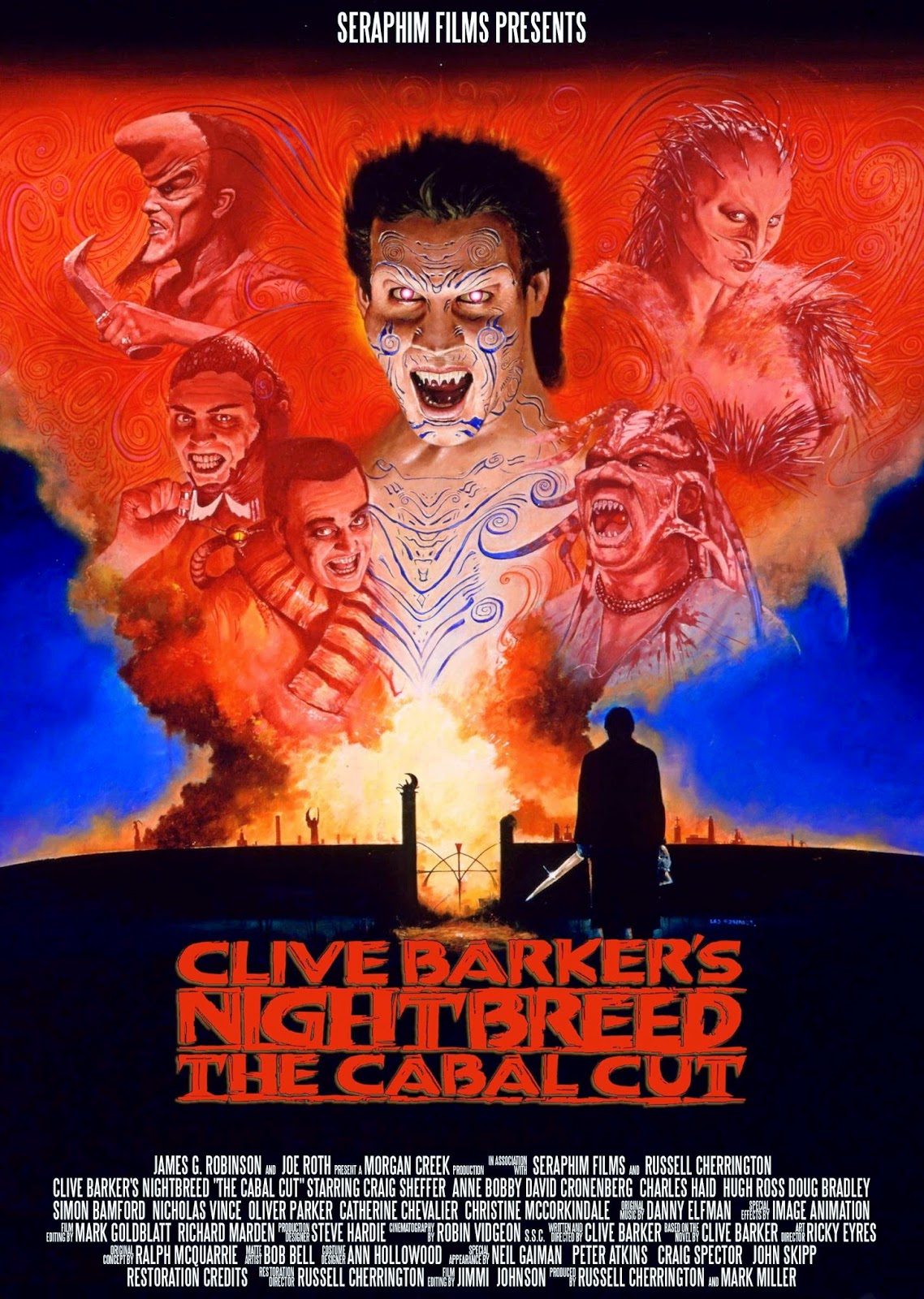
Nightbreed
As I typically keep up on forthcoming special editions of various movies and frequent Bluray
collector sites, I became aware of a movie named Nightbreed that was being given quite the royal treatment. Shout! Factory was releasing a 3 disc special edition of this film, pricing it at about $45 and stamping limited numbers on some of them upon the thriving horde of movie collectors worldwide. Never heard of Nightbreed before, so I took it upon myself to see what the fuss is all about, and most importantly, decide if I wanted to partake in this expensive special edition. After all, at a price like this, there must be something boiling underneath.
The first hit on this movie brings up the name Clive Barker, who wrote and directed the film, which was based on a short story of his own creation. It's a familiar name, especially for those of us growing up in the late eighties: a few iconic horror movies adorned Clive's name above the title, including Hellraiser and Candyman. He was also a well known author, and was involved in various comic book projects (and still is, most likely). It wasn't my type of horror back then, so I missed out on all of it, including Nightbreed.
Not having seen it upon initial release shields me from the nostalgia-goggles that so often blurs the quality of a product - or movie, in this case - from your harsh adult judgments. It's not a bad thing by any account: I love watching movies that were significant to me when I was younger, even though I can see why they would be terrible. Nightbreed, however, was met with critical and box office failure when it released back in 1990. A special edition decades later like this screams cult classic, which indicates I could very well enjoy the film. After all, I've been revisiting many films from the eighties recently and have gotten a kick out of most of them.
Nightbreed is definitely a cult classic. Further investigation unearthed a story of studio meddling, cutting and general Hollywood tomfoolery. The theatrical cut was an abomination, and soon after, Clive Barker put together his own cut which became known as The Cabal Cut. It looks like there was a 145 minute version Barker put together back in 1989, which existed only on VHS as a work print and presumably was bootlegged into cult status. Fast forward two decades, and a newer 159 minute cut was revealed on another long-lost VHS. In 2012, a new 155 minute cut was put together, using elements of the VHS tapes and a DVD from the Warner Bros Archive. This was enough to get people really excited, and it was time for Shout! to announce an upcoming DVD release for the followers of this film. Turns out, they really outdid themselves, as they discovered the original film elements of Nightbreed and gave Clive Barker the opportunity to put together his own cut. The Director's Cut would be the definitive version of this film, and it's made up entirely by thoroughly restored original footage. If you were part of the cult, this was a dream come true.
With all that knowledge, it was time to watch the movie - because I knew about the history of the film I kept myself dark on the film itself. I chose to watch the Director's Cut of course. And what can I say? This is not a good movie, and it pains me to say that. I really wanted to enjoy this film. It's not even a matter of exceeding or falling short of expectations, I just sincerely could not enjoy the film. The first act felt disjointed; there was a lot happening that I didn't understand, nor did the film provide me a lot of clue in the end to what was happening. Our main character - played by Craig Sheffer- is flat generic and meaningless. His girlfriend, played by Anne Bobby, is perhaps the most versatile and impressive on screen, but her poor character keeps walking into danger. Many character actions just don't seem to make a lot of sense. The plot seems like a mess. Is this because there was such a focus on the "monster" makeup? Clive Barker's mind can produce some really interesting imagery, and it's all present here. Each of the dead, residents of Midian, are unique and interesting to look at. Unfortunately they all kind of suck. They are not interesting characters. In fact, they all seem like pushovers with a ton of negativity. Barker wants to guide us through a dream like world, but there's simply too much. The literal trip down the levels of this underground world is incredibly impressive: the monsters and sets are incredible. Unfortunately it's all marred by poor dialogue, silly actions and a weak story. Then there's Cronenberg - yes, that David Cronenberg, who plays a doctor who is really a serial killer trying to frame our poor protagonist. He aids in exposing the hidden refuge of these mutants, and helps the plot along and get us our actual "horror" in the film with traditional slasher methods. The mask he wears is brilliant.
Apparently Clive Barker wanted this to be a Star Wars of horror films, so to speak. And you can feel that ambition flowing from the film and it's rather unfortunate that it falls flat. It seems like this happens too often, and when you look back at some of the great trilogies and worlds, they are built on strong first outings, and those first films don't necessarily try to build up an entire world and leave strings out for future iterations. The first Star Wars film - episode IV - can stand on its own. When you boil down the plot and the characters, there are classic elements that have withstood the test of time and proven themselves in other films (before Star Wars). Through the creation of compelling characters, future stories are born.
The story of how this film came to be restored is interesting, and I'm envious of the fans of the movie. If only some other cult classics could be so lucky and treated with such care and passion. While the movie didn't impress me, I can see that passion coming through, and I can see hints of great, more wonderful things emerging.
collector sites, I became aware of a movie named Nightbreed that was being given quite the royal treatment. Shout! Factory was releasing a 3 disc special edition of this film, pricing it at about $45 and stamping limited numbers on some of them upon the thriving horde of movie collectors worldwide. Never heard of Nightbreed before, so I took it upon myself to see what the fuss is all about, and most importantly, decide if I wanted to partake in this expensive special edition. After all, at a price like this, there must be something boiling underneath.
The first hit on this movie brings up the name Clive Barker, who wrote and directed the film, which was based on a short story of his own creation. It's a familiar name, especially for those of us growing up in the late eighties: a few iconic horror movies adorned Clive's name above the title, including Hellraiser and Candyman. He was also a well known author, and was involved in various comic book projects (and still is, most likely). It wasn't my type of horror back then, so I missed out on all of it, including Nightbreed.
Not having seen it upon initial release shields me from the nostalgia-goggles that so often blurs the quality of a product - or movie, in this case - from your harsh adult judgments. It's not a bad thing by any account: I love watching movies that were significant to me when I was younger, even though I can see why they would be terrible. Nightbreed, however, was met with critical and box office failure when it released back in 1990. A special edition decades later like this screams cult classic, which indicates I could very well enjoy the film. After all, I've been revisiting many films from the eighties recently and have gotten a kick out of most of them.
Nightbreed is definitely a cult classic. Further investigation unearthed a story of studio meddling, cutting and general Hollywood tomfoolery. The theatrical cut was an abomination, and soon after, Clive Barker put together his own cut which became known as The Cabal Cut. It looks like there was a 145 minute version Barker put together back in 1989, which existed only on VHS as a work print and presumably was bootlegged into cult status. Fast forward two decades, and a newer 159 minute cut was revealed on another long-lost VHS. In 2012, a new 155 minute cut was put together, using elements of the VHS tapes and a DVD from the Warner Bros Archive. This was enough to get people really excited, and it was time for Shout! to announce an upcoming DVD release for the followers of this film. Turns out, they really outdid themselves, as they discovered the original film elements of Nightbreed and gave Clive Barker the opportunity to put together his own cut. The Director's Cut would be the definitive version of this film, and it's made up entirely by thoroughly restored original footage. If you were part of the cult, this was a dream come true.With all that knowledge, it was time to watch the movie - because I knew about the history of the film I kept myself dark on the film itself. I chose to watch the Director's Cut of course. And what can I say? This is not a good movie, and it pains me to say that. I really wanted to enjoy this film. It's not even a matter of exceeding or falling short of expectations, I just sincerely could not enjoy the film. The first act felt disjointed; there was a lot happening that I didn't understand, nor did the film provide me a lot of clue in the end to what was happening. Our main character - played by Craig Sheffer- is flat generic and meaningless. His girlfriend, played by Anne Bobby, is perhaps the most versatile and impressive on screen, but her poor character keeps walking into danger. Many character actions just don't seem to make a lot of sense. The plot seems like a mess. Is this because there was such a focus on the "monster" makeup? Clive Barker's mind can produce some really interesting imagery, and it's all present here. Each of the dead, residents of Midian, are unique and interesting to look at. Unfortunately they all kind of suck. They are not interesting characters. In fact, they all seem like pushovers with a ton of negativity. Barker wants to guide us through a dream like world, but there's simply too much. The literal trip down the levels of this underground world is incredibly impressive: the monsters and sets are incredible. Unfortunately it's all marred by poor dialogue, silly actions and a weak story. Then there's Cronenberg - yes, that David Cronenberg, who plays a doctor who is really a serial killer trying to frame our poor protagonist. He aids in exposing the hidden refuge of these mutants, and helps the plot along and get us our actual "horror" in the film with traditional slasher methods. The mask he wears is brilliant.
Apparently Clive Barker wanted this to be a Star Wars of horror films, so to speak. And you can feel that ambition flowing from the film and it's rather unfortunate that it falls flat. It seems like this happens too often, and when you look back at some of the great trilogies and worlds, they are built on strong first outings, and those first films don't necessarily try to build up an entire world and leave strings out for future iterations. The first Star Wars film - episode IV - can stand on its own. When you boil down the plot and the characters, there are classic elements that have withstood the test of time and proven themselves in other films (before Star Wars). Through the creation of compelling characters, future stories are born.
The story of how this film came to be restored is interesting, and I'm envious of the fans of the movie. If only some other cult classics could be so lucky and treated with such care and passion. While the movie didn't impress me, I can see that passion coming through, and I can see hints of great, more wonderful things emerging.
Friday, October 31, 2014
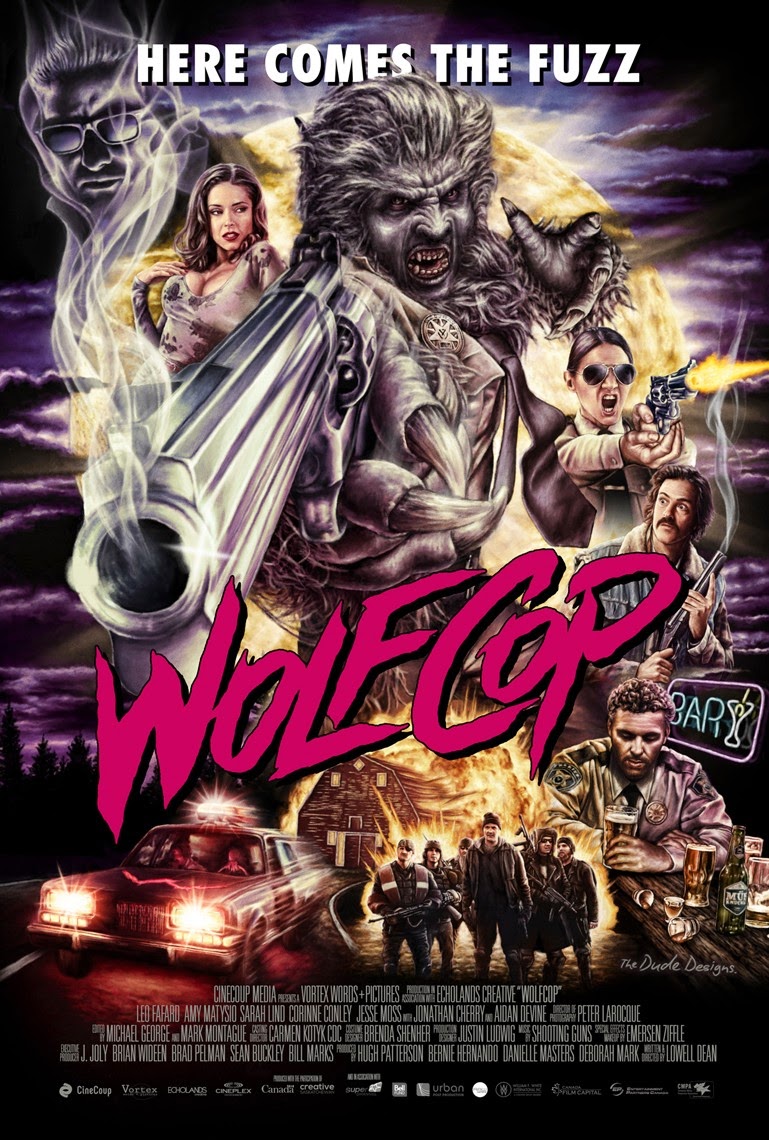
WolfCop
Without knowing anything about the movie before seeing it, and judging entirely based on the title and the movie poster itself, you can and do expect a fair amount of cheese. And you get it, in spades. I certainly sat down and started watching this with the full expectation of a terrible movie and yet again, not so surprisingly, I thoroughly enjoyed it. The movie opens on Leo Fafard playing Lou, our soon to be titular wolf cop, waking up, hungover with a woman by his side in bed. The first thing you notice is that this film is not going to be subtle: Lou's an alcoholic to an extreme. And he's a cop, so seeing him drink on the job forces you to detest him, of course, but after the film continues to drive home his alcoholism, you can't help but laugh at the absurdity of it all.It's no spoiler that he becomes a werewolf, as suggested by the title of the movie. And it is brilliant. Just brilliant. I love these werewolf films, and love that the film spends so much time on his initial transformation. It's disgusting. As it should be. They selectively choose what we see, to let our imaginations run just a bit wild with horror before the full reveal and give the film makers credit for their achievement in fantastic makeup and special effects with such a modest budget. With his new found abilities, Lou takes the high road and decides to make up for his lackluster human morals by fighting crime in his wolf form.
WolfCop answers all the questions that we didn't know we were asking: What part of you transforms to wolf first? Can werewolves eat anything other than people? How long can a person survive without a face? Can werewolves have sex? Or more importantly, make love?
We're treated to a delicious montage of gore, action and humour with scene after scene of ridiculousness. Of course, the movie can't take itself too seriously, and maintains a short run time. It's not going to overstay its welcome nor linger on any poor scenes before advancing onto the next: this movie knows what its doing and it gets the job done well.
We're left wanting more, and the movie promises a return. The sooner the better!
Saturday, September 20, 2014
Six Months of Movies: January to June 2014
Another six months has gone by and I didn't even notice, hence the late nature of this post. It's not exactly a high priority either, but decided to get around to it. Instead of just giving boring old numbers, I figured I would provide some information on the movies I watched this past six months. But first, the numbers.
Nothing too exciting to report here, aside from consistency. No more than 15 movies in a month, and no less than nine. If I knew I was dipping into single digits, I would have picked up the slack.
2014: 73 movies
2013: 67 movies
2011: 70 movies
What type of movies did I take in for 2014? We can start first by speaking to the quality of the film, as when I record a view, I also record a rating to it, on a scale of one to five stars.
Four movies scored 4.5/5, those being: Inception, The Dark Knight, TRON: Legacy and Senna.
Quite a few more scored 4. Many of these were movies I've seen before, save these films which have a late 2013 or 2014 release: Edge of Tomorrow, Gravity, The Grand Budapest Hotel and The Wolf of Wall Street.
In the first six months of 2014, I've seen 12 movies actually released in 2014, 23 from 2013 and 16 from before 1995.
The worst two movies I saw in this period were Nurse 3-D and The Art of the Steal, sitting at 1 and 1.5 stars respectively. There are quite a few movies sitting at 2 stars, which I don't believe: Critters and The Adventures of Buckaroo Banzai were good, fun movies but somehow got a low rating. Pompeii and Robocop (the remake) got a deserved score of 2, and both were released in 2014.
The overall average is 3.1 stars, which makes sense.
When will I watch a 5 out of 5 movie?
| Fig 1. January 2014 to June 2014 |
| Fig 2. January to June Year by Year Comparison |
This comparison between the same period in 2014, 2013 and 2011 speaks more to the consistency I mentioned before. 2013 had a major dip in it, and 2011 was very much more up and down, whereas 2014 has been less prone to those fluctuations. In terms of total viewed, it's pretty steady throughout the years.
2014: 73 movies
2013: 67 movies
2011: 70 movies
What type of movies did I take in for 2014? We can start first by speaking to the quality of the film, as when I record a view, I also record a rating to it, on a scale of one to five stars.
Four movies scored 4.5/5, those being: Inception, The Dark Knight, TRON: Legacy and Senna.
Quite a few more scored 4. Many of these were movies I've seen before, save these films which have a late 2013 or 2014 release: Edge of Tomorrow, Gravity, The Grand Budapest Hotel and The Wolf of Wall Street.
In the first six months of 2014, I've seen 12 movies actually released in 2014, 23 from 2013 and 16 from before 1995.
The worst two movies I saw in this period were Nurse 3-D and The Art of the Steal, sitting at 1 and 1.5 stars respectively. There are quite a few movies sitting at 2 stars, which I don't believe: Critters and The Adventures of Buckaroo Banzai were good, fun movies but somehow got a low rating. Pompeii and Robocop (the remake) got a deserved score of 2, and both were released in 2014.
The overall average is 3.1 stars, which makes sense.
When will I watch a 5 out of 5 movie?
Friday, August 15, 2014
Cloud Atlas
You know what really sucks? Roger Ebert passed away over a year ago now. There are very few movie reviewers that I would actively go out and read on a regular basis, or hunt down their opinion on, but Ebert was the top. We didn't always agree, but I have a tremendous amount of respect for his writing, his knowledge and opinions on all things movies. In the past few movies I've watched, I make a cursory Google search for that film. I land upon the basic sites, like iMDB and Wikipedia, where I can gather some information. Then, I see just below those results, articles from other sites, including reviews. And Ebert's articles always seem to be on the first page. Reading his reviews on movies that I'm just discovering now brings about mixed emotions: sadness, that he is gone and can't hear his opinions anymore, but happiness as well, for the contributions that he shared with us. Cloud Atlas is the latest movie where I sought out Ebert's column, and was again pleased to find a well written article that didn't try to pick apart the film or attempt to explain how it all comes together. This particular quote stands out to me:
His approach to simply consume the movie as is stood out to me, and made me realize that I perhaps tried to watch it incorrectly - if such a thing is possible. Halfway through the film I did just this though, as I consumed without the concern of trying to delve into secret meanings or even trying to tie the pieces of the film together. I quite enjoyed it, and yes, will be making plans to watch it again.
Cloud Atlas was a difficult film to finally sit through. It was difficult to find anybody to go see this movie with initially, so I resolved to go - on a Sunday afternoon - by myself. It's lengthy, clocking in at just under three hours, but the buzz surrounding the film sold me. I grabbed a quick lunch and made my way to the theatre, at which point my phone buzzed with a phone call, which was a bit different than the typical texts. It wasn't anything important, but a simple invitation from a friend to spend the afternoon visiting local sites. In an effort not to decline social invitations, I accepted, and put Cloud Atlas off. I never had a chance to go back to the theatre to see it.
After some time, it became available for home viewing and my same friend from before said we need to watch it together, which I would love to do. But schedules happen, days slip by, followed by months. Finally, something gives, and my friend cannot wait any longer - I don't blame him, and he tells me he would love to watch it again. Unfortunately there were more pressing things, and it never came to be. Vdio launched, and I signed up. It was the video offshoot of Rdio, which I absolutely adored. However, Vdio wasn't the same all you can eat monthly cost like Netflix was. You had to buy movies, which I had very little interest in doing digitally (I maintain a selection of physical Bluray films). The service was struggling, so they gave me $25 of credit to buy anything on the store. I went and immediately spent that credit on Cloud Atlas. However, it wasn't meant to be: Vdio went under a few months later and I lost access to the movie.
Visiting with my parents, they decided to give Cloud Atlas a try. I think we got about thirty minutes into the film before they wanted to turn it off. It seemed complicated, jarringly cutting between time periods. And it was three hours long. I was beginning to think it wasn't meant to be. That was, until a couple of weeks ago, when I stumbled upon the Bluray copy of Cloud Atlas at a very reasonable rate. Another friend said, without question, purchase the film and watch it. So I did.
I wasn't blown away. Expectations had grown over the past two years to a degree that wouldn't allow me to reach that level of satisfaction with the film. I wasn't entirely sure what to make of the film either, or really what type of movie it was. The actors each play many different roles in the film, which is composed of six core time periods. You get an introduction to each time period, just as you would with any story. They seem unrelated to begin with, and we keep jumping from one to another. We discover that each timeline is its own story, and slowly, we star to see parallels running between them. Maybe they are related. Events in some timelines seem to have an effect on others. Is time a loop? Do they run in parallel?
The entire thing is masterfully put together. Following each story is effortless - for the most part - and before you know it, the film comes to a conclusion that seems to pull it all together. The actors do a fantastic job, and are often unrecognizable in their various roles. When the credits roll, they give you images of each of them, and I was pleasantly surprised as many of them I had no idea were acting in a part that I had just watched for the past three hours. The film is ambitious, and delivers on different levels. No, I didn't understand everything, but I know now that I don't need to. I'll finish with another quote from Ebert's review, which can be found here.
I gave up any attempt to work out the logical connections between the segments, stories and characters. What was important was that I set my mind free to play.
His approach to simply consume the movie as is stood out to me, and made me realize that I perhaps tried to watch it incorrectly - if such a thing is possible. Halfway through the film I did just this though, as I consumed without the concern of trying to delve into secret meanings or even trying to tie the pieces of the film together. I quite enjoyed it, and yes, will be making plans to watch it again.
Cloud Atlas was a difficult film to finally sit through. It was difficult to find anybody to go see this movie with initially, so I resolved to go - on a Sunday afternoon - by myself. It's lengthy, clocking in at just under three hours, but the buzz surrounding the film sold me. I grabbed a quick lunch and made my way to the theatre, at which point my phone buzzed with a phone call, which was a bit different than the typical texts. It wasn't anything important, but a simple invitation from a friend to spend the afternoon visiting local sites. In an effort not to decline social invitations, I accepted, and put Cloud Atlas off. I never had a chance to go back to the theatre to see it.
After some time, it became available for home viewing and my same friend from before said we need to watch it together, which I would love to do. But schedules happen, days slip by, followed by months. Finally, something gives, and my friend cannot wait any longer - I don't blame him, and he tells me he would love to watch it again. Unfortunately there were more pressing things, and it never came to be. Vdio launched, and I signed up. It was the video offshoot of Rdio, which I absolutely adored. However, Vdio wasn't the same all you can eat monthly cost like Netflix was. You had to buy movies, which I had very little interest in doing digitally (I maintain a selection of physical Bluray films). The service was struggling, so they gave me $25 of credit to buy anything on the store. I went and immediately spent that credit on Cloud Atlas. However, it wasn't meant to be: Vdio went under a few months later and I lost access to the movie.
Visiting with my parents, they decided to give Cloud Atlas a try. I think we got about thirty minutes into the film before they wanted to turn it off. It seemed complicated, jarringly cutting between time periods. And it was three hours long. I was beginning to think it wasn't meant to be. That was, until a couple of weeks ago, when I stumbled upon the Bluray copy of Cloud Atlas at a very reasonable rate. Another friend said, without question, purchase the film and watch it. So I did.
I wasn't blown away. Expectations had grown over the past two years to a degree that wouldn't allow me to reach that level of satisfaction with the film. I wasn't entirely sure what to make of the film either, or really what type of movie it was. The actors each play many different roles in the film, which is composed of six core time periods. You get an introduction to each time period, just as you would with any story. They seem unrelated to begin with, and we keep jumping from one to another. We discover that each timeline is its own story, and slowly, we star to see parallels running between them. Maybe they are related. Events in some timelines seem to have an effect on others. Is time a loop? Do they run in parallel?
The entire thing is masterfully put together. Following each story is effortless - for the most part - and before you know it, the film comes to a conclusion that seems to pull it all together. The actors do a fantastic job, and are often unrecognizable in their various roles. When the credits roll, they give you images of each of them, and I was pleasantly surprised as many of them I had no idea were acting in a part that I had just watched for the past three hours. The film is ambitious, and delivers on different levels. No, I didn't understand everything, but I know now that I don't need to. I'll finish with another quote from Ebert's review, which can be found here.
But, oh, what a film this is! And what a demonstration of the magical, dreamlike qualities of the cinema. And what an opportunity for the actors. And what a leap by the directors, who free themselves from the chains of narrative continuity. And then the wisdom of the old man staring into the flames makes perfect sense.
Wednesday, August 06, 2014
The Stuff
Starting a story can be difficult, I understand. It's an important part of the story structure, and when done properly or even differently, can draw you in, turn you away, or set the tone for what is to come. Years ago I had a thought that I should put together a web site that featured the opening credits of various movies. There must be a neat history lesson to learn here, but what I saw in many modern films is the complete lack of opening credits. Oftentimes, you don't even get the title of the movie until the very end, which can help immerse you into the film from the beginning then slap your face at the end to wake you up from the alternate reality you've just sat through to remind you that it's been a movie the entire time. A final blow to follow up on perhaps a revelatory ending. Or maybe the title comes up slowly, to ease you back into the real world.When you put a movie on, before the beginning of the story, you get all the logos of the various studios involved in the creation of the film. This has become an art form upon itself, as more movies have taken it upon themselves to modify the logo a bit to suit the film's tone. The logos are typically animated, and run for ten to fifteen seconds. On some productions, you'll sit there for an entire minute before the movie starts, which is either frustrating, or a helpful aide to ease you into the experience.
The Stuff does it a bit differently. As it casts aside any association with production studios, the first frame jumps into the setup of the story, producing a jarring effect that doesn't really let up for the rest of the story. I guess, you could say, it helps set the tone for the rest of the movie, as it does away with any pretense that this is a legitimate film. Or maybe the copy of the movie we were watching had that element cut out - which is highly unlikely as it's never happened before. The scene is pretty simple and plays out the brief description of the film I read beforehand: a miner discovers a white ooze coming out of the ground, tastes it to find that it's delicious, then immediately declares that he can make a fortune selling it. Then we get a bit of overlay credits, including the title of the film, which affirms to me that we didn't just start the movie ten minutes in.
We're quickly introduced to Mo, a corporate saboteur who takes a contract from the ice cream industry to look into how the white ooze is made, as it is now packaged and sold as The Stuff. Mo is played by Michael Moriarty with an absolute genius performance, nearly breaking the fourth wall in scenes so ridiculous that they must have gone through many takes to get. He works with what he gets though, with some truly ridiculous dialogue, but is also given an opportunity to improvise in many of the scenes. So much of his dialogue is delivered through a half smile, that it's either a perfectly content, smug, confident character or it's just that laughable. Either way, it's an absolute treat to watch.
A young boy sees The Stuff moving on its own inside his family's refrigerator and freaks out - of course, but takes it to a whole new level by going on a rampage in the grocery store. The kid really plays it up, and tries to evade his family who are now under the control of the white ooze. It doesn't take long before he teams up with Mo (and is quickly abandoned without much thought) to discover the source of The Stuff and what it's doing to the populace of the country. They're joined by the woman who spearheaded the advertising campaign to make The Stuff as popular as it is, although at one point she mentions that it practically sells itself. The crew is also joined for a bit by "Chocolate Chip Charlie," who if I can recall was a CEO of a cookie company who has been kicked aside. So he fights back with his fists, which leads us into some nice comedic, gruesome fights.
The film moves along at a good pace, typically getting right into the substance of each scene. I think the movie achieves more than it's B-Movie goals, providing us with cult movie fuel by embracing the absurd and running with it. Larry Cohen, the director, was aiming to put a bit of commentary in on consumerism in the 80's, with an exaggerated parallel to the cigarette and alcohol industry: it may be bad for us, but we can't stop ourselves from consuming more and the overbearing advertising serves as a reminder and push to use/drink/ eat more. Just as in Romero's DAWN OF THE DEAD, victims of The Stuff become zombies, their minds controlled and bent on spreading the ooze to more carriers. Messages of corporate greed, control and corruption are hammered home, especially after the day has been saved. The film has been described as a bit of a time capsule for the decade, so it's a fascinating way to look back at the years where I was just a child, oblivious to it all but still very much part of it.
"Enough is never enough"
Monday, July 21, 2014
Enemy
I wasn't aware of the term 'ambigious cinema' until after reading some reviews of Denis Villeneuve's latest
film, ENEMY. After seeing the term, I was washed over with happiness as it instantly set alight to a list of films in memory that would instantly fall under the label. Those movies were ambiguous enough, that I didn't want the added stress of having to file it away in my mind some where. The way I see it, the distribution of people that enjoy these films is polarizing, although, I will attempt to buck the trend and put myself in the middle (and upon further thinking, skew myself toward enjoyment moreso than hatred). You see it happening more often, but not in Hollywood. Films like THE GREY slip by with an ambiguous ending, although it was easier to process and interpret your own ending. I presume that everybody in the audience who groaned at the lack of the ending are not fans of this type of cinema. With THE GREY, you could easily draw your own meaning. With ENEMY, the task is not so clear. In fact, the film works against interpretation, creating abstraction with the intent to bewilder. As the credits fade onto screen at the end of the film, you're going to sit there, staring blankly with your mouth open. Your brain goes into a desperation mode, as it reaches the far corners of your cob-webbed mind looking for meaning.
This is especially true for the very end scene of ENEMY.
Again, you're either going to really like that, or absolutely hate it. I can sympathize with both, although be warned, I really did enjoy the ending. One of the first thoughts you grab onto was one my friend said: "you can see why it didn't have a wide release." It's almost a shame, but it's also the harsh truth. You know there must be meaning, right? You're just missing it. You try to draw the line from beginning to end, connecting some of the strange imagery, story and characters together. This may be the first mistake: lines don't always connect, and they don't always run straight. Consider time, for a moment. It's linear: past, present and future. But expand into the idea that time is not straight. Time is cyclical, perhaps. Time overlaps on itself. I really don't want to get too much into what I drew out of the film, so as to not spoil the experience for you. I knew next to nothing about this film, aside from Jake Gyllenhaal's killer beard and it being filmed in Toronto. The tagline reads "A man seeks out his exact look-alike after spotting him in a movie." It seems simple enough, and it is - but it's not. It truly was an incredible experience.
So in the spirit of ambiguous cinema, you may be reading an incredibly ambiguous review, if you can even call it a review.
Jake's performance is top notch, as he plays two characters in one film where the subleties between the two are incredibly important. They are look-alikes in the most literal sense of the term. There are times when you're not sure which one you're seeing, especially early on. And when you discover that they are identical, your mind will race back to see if you've been fooled earlier in the film. It won't have much time though, as you become preoccupied with the current scene. ENEMY does not do what you expect, as you sit on the edge of your seat throughout. I couldn't stop thinking about what I would do if I came across my doppelganger in a situation like this. The movie is vividly coloured yellow. What does it mean? Is the movie about one man's struggle with himself? Is it a struggle against a greater power? The film moves slowly about, although the pacing is actually quite tight, as is every scene.
Just like that, I'll end this entry. ENEMY is a movie that begs to seen multiple times, and it deserves it too. It's not meant to be understood immediately: like a fine piece of art you can revisit it to discover something new, or look for further meaning. Discuss it with friends, read reviews. Watch it with an open mind. It deserves to be seen.
film, ENEMY. After seeing the term, I was washed over with happiness as it instantly set alight to a list of films in memory that would instantly fall under the label. Those movies were ambiguous enough, that I didn't want the added stress of having to file it away in my mind some where. The way I see it, the distribution of people that enjoy these films is polarizing, although, I will attempt to buck the trend and put myself in the middle (and upon further thinking, skew myself toward enjoyment moreso than hatred). You see it happening more often, but not in Hollywood. Films like THE GREY slip by with an ambiguous ending, although it was easier to process and interpret your own ending. I presume that everybody in the audience who groaned at the lack of the ending are not fans of this type of cinema. With THE GREY, you could easily draw your own meaning. With ENEMY, the task is not so clear. In fact, the film works against interpretation, creating abstraction with the intent to bewilder. As the credits fade onto screen at the end of the film, you're going to sit there, staring blankly with your mouth open. Your brain goes into a desperation mode, as it reaches the far corners of your cob-webbed mind looking for meaning.
This is especially true for the very end scene of ENEMY.
Again, you're either going to really like that, or absolutely hate it. I can sympathize with both, although be warned, I really did enjoy the ending. One of the first thoughts you grab onto was one my friend said: "you can see why it didn't have a wide release." It's almost a shame, but it's also the harsh truth. You know there must be meaning, right? You're just missing it. You try to draw the line from beginning to end, connecting some of the strange imagery, story and characters together. This may be the first mistake: lines don't always connect, and they don't always run straight. Consider time, for a moment. It's linear: past, present and future. But expand into the idea that time is not straight. Time is cyclical, perhaps. Time overlaps on itself. I really don't want to get too much into what I drew out of the film, so as to not spoil the experience for you. I knew next to nothing about this film, aside from Jake Gyllenhaal's killer beard and it being filmed in Toronto. The tagline reads "A man seeks out his exact look-alike after spotting him in a movie." It seems simple enough, and it is - but it's not. It truly was an incredible experience.
So in the spirit of ambiguous cinema, you may be reading an incredibly ambiguous review, if you can even call it a review.
Jake's performance is top notch, as he plays two characters in one film where the subleties between the two are incredibly important. They are look-alikes in the most literal sense of the term. There are times when you're not sure which one you're seeing, especially early on. And when you discover that they are identical, your mind will race back to see if you've been fooled earlier in the film. It won't have much time though, as you become preoccupied with the current scene. ENEMY does not do what you expect, as you sit on the edge of your seat throughout. I couldn't stop thinking about what I would do if I came across my doppelganger in a situation like this. The movie is vividly coloured yellow. What does it mean? Is the movie about one man's struggle with himself? Is it a struggle against a greater power? The film moves slowly about, although the pacing is actually quite tight, as is every scene.
Just like that, I'll end this entry. ENEMY is a movie that begs to seen multiple times, and it deserves it too. It's not meant to be understood immediately: like a fine piece of art you can revisit it to discover something new, or look for further meaning. Discuss it with friends, read reviews. Watch it with an open mind. It deserves to be seen.
Friday, June 13, 2014
Edge of Tomorrow
Last summer, Oblivion took me by surprise and currently stands as one of my favourite movies (of the past few years, at least). So seeing previews of Edge of Tomorrow brought about an anticipation and excitement for another Tom Cruise sci-fi adventure that was ultimately - and pleasantly - fulfilled earlier this week. There was a fleeting moment of anxiety as the theatre dimmed that the movie would not meet the expectations I had, or that it wouldn't impress me in the same way that Oblivion did last year (a fair comparison). Edge of Tomorrow does not disappoint; if anything, it exceeded my expectations and proves itself as a solid sci-fi action movie.I spent entirely too much time talking about Cruise in my previous entry about Oblivion, giving very little insight into my enjoyment of the movie. It was a film that took many elements of my other, favourite sci-fi films and seemingly blended it into one satisfying vision of the future, and that's all I could say about it. Right now, that's all I could say about it too. In browsing the web the other day, I saw a blurb about Oblivion: how it was all surface, with no depth - and how this isn't actually a bad thing. Yes, it feels great to enjoy a movie on many different levels, but it's also possible to enjoy a movie that is, for lack of a better term, flat. There is no hidden meaning in Oblivion, no subtle context or commentary. What you see is what you get, and in that, it excels. They could have thrown elements of environmentalism to us (how we will inevitably destroy our own planet) or even hint at the brashness of humanity when we clash with aliens. They could have, but it's all been done before, so why not focus on a simple, perfectly executed story line that is universally comprehensible. The movie moves at a perfect pace, characters are well rounded, the music ties it all together (thanks M83) and visuals, along with the special effects, are understated and beautiful.
Edge of Tomorrow could be seen as a second story in the building that Oblivion has laid the groundwork on: a building whose initial purpose is to deliver to us an approachable, successful science fiction film. If not, the two movies go practically hand in hand if for no other reason than having Tom Cruise playing the same character to bring us forward. Edge of Tomorrow raises the stakes though, by introducing a time travel mechanism that will inevitable confuse movie goers. This is a fact: time travel is confusing, as when anybody who puts any thought into it can attest. You could spend more time talking about the time travel mechanics in Looper than you would any other element of the film, and in the end, it seems that it can only detract from the experience. People would be too quick to point out fallacies. Others don't want to put the brain power into it. So it's important to make the rules of your science fiction mechanic very clear in the movie; it should teach you, sell you on it and put it on the backburner for the rest of the film. This is exactly what Edge of Tomorrow does perfectly.
Just like Oblivion borrows heavily from other films within the genre, Edge of Tomorrow's main mechanic has been seen before in the movie Groundhog Day, which should be immediately recognizable to most audiences. In Groundhog Day, Bill Murray's character is forced to live the same day over again, until he "gets things right." It's a comedy that turns romantic, that could have became incredibly grim - when you spend time thinking of it, and put yourself in his shoes, the suicide montage that plays off comedically in the film is the depressing and dismally inevitable result of living the same day thousands of times. It's not a stretch to believe Phil was travelling through a level of hell in this movie; luckily, the film expertly guides us away from the grim reality of Phil's phenomenon. In Edge of Tomorrow, Tom Cruise's character, Cage, is stuck in a similar loop of living the same day over again - an ability that the aliens themselves possessed and have presumably used to all but conquer the planet. Every time he dies, he wakes up the previous day and has to relive it again. The premise, of course, being that he gets better every time he cycles, become a great warrior. Can he make a difference though?
We're treated to a couple of "death montages" that actually play out with some dark comedy, but it doesn't take long for the film to really get underway. We're introduced to Emily Blunt's character, who adds more weight to the film - she does a great job, and the story takes the right direction. I thought initially it would become fairly predictable, but I'm happy to have experienced a couple of satisfying turns, and some clever ways to develop these characters while still retaining focus on the end mission. The special effects are - as expected - amazing. While the "Live. Die. Repeat." tagline is front and centre, we're treated to some neat exoskeleton combat suits, mind-bending action sequences and a world that manages to convey a realistic future. The director, Doug Liman, keeps things tight and moves things along well. I'm not left with many criticisms. We're also not left with questionable paradoxes: the movie instructs us, doesn't break its own rules and delivers on all front. I'm not convinced there is much more than the surface here, and that's not a bad thing. I'll be sure to check this film out again, and I look forward to it.
Friday, May 30, 2014
Pompeii
My parents have always been big movie fans, often seeing everything that comes to the theatre regardless if it's good or bad. Whenever I go visit them, I eagerly anticipate watching a movie in one of their many recliners, embraced by the heavy blanket embroidered with majestic golden retrievers. The air conditioning typically runs high, so the blanket is needed, and the end result is a cozy movie watching experience that only mom could provide.
On a recent visit, my father was listing off the movies that we could watch. I'd seen many of them, but voted for Pompeii. My perception of the movie made it seem like a good match, and it didn't matter that everybody said the movie was terrible. If anything, that works for the movie in these situations. I often can't take my mom's word for the quality of a film, as she tends to enjoy it all - unless it's overly violent, vulgar or offensive. Pompeii is a PG-13 rated film that has been scientifically melded together to be as inoffensive as possible: you won't find much blood here (although there is violence), a lack of skin, no sign of band language, and simple leading characters with names you don't need to remember.
The story is familiar for anybody who has watched movies in the past, and the Pompeii name is going to be familiar to many who learned about the disaster in school. To catch everyone up though on the story, Pompeii was an ancient city that was devastated by the eruption of the nearby Mount Vesuvius in the year 79AD. Instant death occured for most of the inhabitants, estimated at around twenty thousand. The city was then covered in many metres of ash, where it would remain for another thousand years before the city (and a neighboring town) were rediscovered, so to speak. What you see in many images of are the result of injecting plaster into the digs, which exposed "perfectly" preserved people and animals, in various living and dying states. The images are both fascinating and unsettling; a reminder of how fragile life is and how humanity seems to love living on the edge. Indeed, there are over 3 million people living close to Vesuvius now.
So how do you fit that into a full length feature film? Well, you first watch Gladiator a few times to figure out what worked for it, then remove those elements. Halfway through your film, have the volcano explode and we can proceed to run frantically around, and hope that our hero gets away with his girl, and the villain is taken out with a gigantic, burning rock. Use Pompeii for the backdrop, because people will actually recognize the name. It's a recipe for success, right? With a budget reportedly hanging around $100 million, the film would gross just $23 million ($98 mil internationally) to become classified as a gigantic flop. And unfortunately it's not even the type of movie that will live well afterward, perhaps picking up a cult following of sorts. No, this is an example of a movie that will be forgotten, only coming up as a footnote in articles describing the history of the ancient town.
Is the movie all that bad? It is - and it's not. For a formulaic, inoffensive romp of special effects, it could have done much worse. It's just that the story has been done before, and this brings nothing new to the table. Gladiator was released in 2000, was a brilliant film and still in the minds of movie-goers, so a film like this may seem like a bit of a cheaper, weaker rip off. What stands out then are the elements missing from Pompeii that really made Gladiator shine, which is nearly everything: real emotion, motivation, context, acting, pacing, etc. The list goes on. Pompeii is empty and harmless. But it may not be fair to compare this to Gladiator in the end: Pompeii could have done much worse. Kit Harrington and Emily Browning were decent enough, and it's always nice to see Jared Harris on screen. I haven't seen Carrie-Ann Moss in anything in what seems like ages. Keither Sutherland though, damn. If anybody could be accused of phoning in a performance, this is definitely it. I'm thinking the movie would have been better off without his character at all, and instead spend more time on building the chemistry between our main love interests and our hero's rise from orphan to slave, from slave to gladiator, and from gladiator to free man. The shining star in this film has to be Adewale Akinnuoye-Agbaje, who plays another gladiator who must do battle one more time before earning his own freedom. You may recognize him as Eko from LOST, or from other films like Thor, and The Mummy Returns. Let's get a Pompeii prequel that focuses entirely on Atticus' story. Now that, could be great.
Friday, May 23, 2014
Godzilla
There is a tremendous amount of guilt when I tell myself - and others - that Godzilla has been an institution in my life since, well, as long as I can remember. In the mid-eighties my father and I would spend an inordinate amount of time watching Godzilla movies on Betamax. My favourite around the time was GODZILLA 1985, although I haven't seen it in years (and reviews indicate it may be one of the worst). The guilt comes from not having watched any for a solid period of time, perhaps fifteen years or more; the only exception was taking a break to watch GODZILLA 2000 and of course, the abomination of Hollywood's 1998 remake. For one of my birthdays, my friend obtained a large amount of the franchise films and we watched a few, and it was all new to me. It turns out I don't know much about Godzilla, but that hasn't stopped me from loving the character, or falling into a warm, nostalgic bliss when I recall Sunday afternoon's spent in front of the black and white set watching the King of Monsters' exploits as a child.There's no better way to break back into the Godzilla franchise than experiencing it on the largest scale possible, the IMAX screen. If a large screen was ever needed, it's to fit the scale of Godzilla himself. So it was a Monday afternoon when my friend and I undertook the mission, plopped down our cash and strolled into the IMAX screen. The ominous voice told us it was time to put on our 3D glasses; we obliged, and the famous IMAX countdown began. When it hit 2, then 1, a quiet moan turned into a monstrous thunder of rage and fear inducing terror that only the voice of Godzilla could pull off. The roar of Godzilla brought shivers down my spine. I was instantly transported back in time as nostalgia reached out and caressed the back of my head. At this point I had a feeling that this was going to be it: I was going to love this movie regardless if it was terrible or not. If all I got was an amazing rendition of the King himself, with more of that mighty roar, I would be satisfied.
So at this point, my opinion may be skewed into bias. I loved this film. The slow build-up and reveal of the King of Monsters was perfect. Godzilla himself looked incredible: he had all the appearances of the Godzilla we've come to know and love, and none of the giant lizard monstrosity that appeared in Roland Emmerich's 1998 attempt. His sound was spot on, and loud, just as it should be. This is exactly how a young Ryebone would picture Godzilla in the future: larger, louder, full of menace and warmth. Satisfaction was finally here.
In the 1998 version they attempted to make Godzilla the villain, which he inherently will be, as he tromps through cities causing death and destruction. And that's how Godzilla first appeared, in 1954 (and 1956 in the American butchering). Godzilla represents the nuclear threat, a man-made terror that we unleash on ourselves and once out, are unable to stop. This remake takes the focus away from monster-as-man's-creation and puts humanity as the semi-hapless victim (they are partially responsible, but the film focuses elsewhere), which is a significant change that doesn't really detract from the quality of the film, but definitely takes away potential, meaningful depth that could help the film long term.
It's unfortunate then as well, that the acting stood out as particularly terrible. Our main protagonist was barely that, played with wooden stoicism by Aaron Taylor-Johnson, who you may remember from the Kick-Ass films. He may be a victim of the script, which doesn't give him a lot to work with: his character is fairly passive and seems to wander from location to location, coming into close contact with more important characters through sheer chance than anything else. It would have all been forgiven though, if it wasn't for the great job that Elizabeth Olson did opposite Johnson's character. The scene was lopsided, awkward and seemingly cut short out of embarrassment. Bryan Cranston delivers, of course, but he doesn't get nearly as much screen time as he deserves and what the film actually needs. I would have thought that Ken Watanabe would be more significant as well, but he seems to be stuck in a daze throughout the film. I'll blame the script for that one. When you boil it down, it seems there were quite a few missed opportunities: they had the right actors, but didn't do the right things with them.
A slow build-up to Godzilla and his fight scenes may put off the modern viewer, but they are faithful to the Toho films of past and allowed the anticipation to build to a solid pay off, although we could have used a bit more (who wouldn't want more, really). There are times when the camera seems to cut off too early, but I feel as though it executed properly. Gareth Edwards was able to capture Godzilla's character and makes us see why he's named the King of Monsters. It doesn't blatantly set us up for a sequel - although there will be one - and stands tall in the franchise. The problems and missed opportunities will not get in the way of the child-like awe and giddiness that I felt throughout the film. It's an excited state that I haven't felt at the movies in quite some time, and seems rather fitting that it comes back here.
Friday, May 16, 2014
The Amazing Spider-Man 2
That the general public wasn't ready for a Spider-Man reboot ten years after the release of the "original" in 2002 is proven by the relatively poor box office numbers the new one has managed to do. However, I think it's safe to say that everyone is happy that it wasn't as bad as Spider-Man 3, which was a boneheaded mess (for the most part). I didn't really care for The Amazing Spider-Man in 2012, but it wasn't terrible. I like to think that it would have done much better if it wasn't overshadowed by Marvel's runaway juggernaut of The Avengers films. And as time keeps on churning, the need to bring the largest Marvel properties back into the fold of the home studio is becoming more pertinent with every release. Sony did a good job twelve years ago, but Marvel came in and disrupted the whole thing. We wanted a crossover with X-Men as well back then, but the fact that different studios licensed our beloved characters all but cemented that this will not happen. Enter Marvel, who turned the comic book movie industry on it's head. With the advent of Spider-Man 2, Sony is talking about a similar structure, albeit with purely Spidey related characters - the only ones they are licensed for. They're talking Sinister Six and spin off movies, so it's relevant to look at this singular movie not only as a Spider-Man sequel, but as a setting off point for a gargantuan franchise of movies, television series and toy lines.The first movie in this series did not impress me. I felt as though they messed with the origin of Spider-Man just a bit too much: they took him away from the wrestling ring yes, but what really got me was Peter Parker as a character. That is to say, he was ass. And I don't want to discredit that Parker was an ass in the original story, but he had good reason for it (kind of). My issue is that Parker is an ass throughout the entire film. He's kind of a passive aggressive bully with a jerk attitude that just didn't fly with me. I chalked it up to modern times: this is a remake for the current generation. I realized that Spider-Man was not being written for me anymore, but molded into a persona that current kids can relate to. So yeah, I'm just too old now, great. There were also a few ridiculous elements in the movie, and maybe too-convenient coincidences but overall, it was a decent ride, just not entirely my thing. As a child, I collected Spider-Man comics like it was nobody's business - they make up the bulk of my collection. And today, when I look at a modern comic or storyline, I become bewildered, and swing back to my old collection of eighties and nineties comics where I find comfort in the writing and art styles (except Spectacular Spider-Man, the art always bothered me in that title).
So I was pleasantly surprised in The Amazing Spider-Man 2. It was pretty good!
First, there was the acting, which I think has improved greatly since the first iteration. Garfield is definitely hitting a comfort spot here and has dropped the smug, jerk like mannerisms. Emma Stone turns in another good performance, as she has more to work with in this film. What it equates to real, genuine (I'm buying it) on screen chemistry which helps the film quite a bit and actually leaves the original trilogy in the dust (many moments between Maguire and Dunst were just weird). The rest of the cast, including Foxx as Electro, is full of talent and put in decent performances.
This isn't a Spider-Man origin story, which helps (for me) my enjoyment of the film. We've sat through enough already, so moving on to something new feels refreshing. Tackling new villains is perfect, although I will say that I don't feel as though Electro had much motivation or screen time. The same could be said for other villains, although I appreciate that Rhino merely book-ended the film, which lends itself to appearing in future movies. It's become pretty defacto that our favourite villains will be enhanced through technology, as opposed to their original powers. X-Men set the standard for costumes that will work on screen, and this is no different, as the villains take on somewhat realistic looks, although I'm glad to see them go over the top a bit. Electro looked very cool, although it reminded me too much of a recent video game release. You could easily say the movie dragged on too long - and it did. The movie's plot didn't necessarily focus on what I want it to, and spent a lot of time on Peter and Gwen's relationship. Which is great and all, but I got it already, you know? The movie isn't necessarily subtle, and because of this, I feel it wastes some time here and there.
Spider-Man, as depicted on the streets fighting crime, has matured a bit in his juvenility: he's quick with his wit, and is more comfortable with both criminals and fighting. He's tormented though, and in wanting to protect everyone he pushes them away. With great power, right? I'm really looking forward to the third film now, to see where Spider-Man's actual character goes: they introduce villains but they also grow Spidey's character, so we should have a fairly solid trilogy. Then where? Well, they were talking about Sinister Six, which is always classic. They've firmly established that all these great villains will be a byproduct of Oscorp special projects working in the dark, which is fine I suppose; it's a popular comic book trope. Spin off movies? Maybe we can get a Black Cat film to help fill the lack of female heroes on screen. He has one of the largest, most diverse rogues gallery in the industry, so there is a lot to tap into. We got a glimpse of a solid Sandman story in Spider-Man 3 (I believe - if the rumours are true - that he was the focus of the third film, when the studio forced Raimi to include more villains and plot than the movie could sustain) that was driven not by a greedy criminal, but a man trying to make ends and doing anything for his family. Done right and with some actual character study, there could be a long list of movies featuring Spider-Man villains that could lead into a mixed movie. They could do for villains what The Avengers did for heroes, and because it hasn't really been done before, it would feel fresh.
Tuesday, May 06, 2014
Sorcerer
As I "review" films I often make a note of what my expectations were going into the film, and how those expectations affect my level of enjoyment. It's typically an inverse relationship with low expectations often resulting in a high enjoyment of the film. That is to say, it's easier to enjoy a movie if you bring in low expectations, as it's harder to enjoy a movie with high expectations. Oftentimes, I think of it as a crutch, and it's easy to dismiss or praise a film based on that binary scale. Every so often though, I bring in expectations not of general quality, but regarding specific elements, which can either be met or not met, and in turn, my satisfaction could go either way. For an early example, I look back to the original Pirates of the Caribbean: The Curse of the Black Pearl. In this case, I knew very little and didn't expect very much, but I did want to see some great skeletal action - you could say I wanted an update on the old Clash of the Titans skeleton combat that I so thoroughly enjoyed as a child. I got it, and much more (did anyone expect such a clever performance from Depp though, really).
Over the past few weeks I've been keeping tabs on the latest Blu-ray releases, and saw a movie named Sorcerer come up on a frequent basis. I hadn't heard of the film before, and for some reason, I never sought out any information on it. I would see the cover art - and this is crucial - in thumbnail form alongside other April releases, but I would never click on it. I saw news of different editions, and discovered that the film is from 1977 and directed by William Friedkin, a name of whom I did not recognize (although in retrospect I should have, being the director of The Exorcist). None of this was on purpose, but it ended up being quite the experiment in what your expectations can do to a film.
I'll allow you to stop reading now if you don't want to know more about the movie - an effort for me to pass onto you the ability to view the movie with a completely blank slate. (So spoilers ensue, of course.)
Thursday, May 01, 2014
Movie Collection part 6: The Third Era
The Second Era of movie collecting for me would be marked by the wrap up of The Great DVD Purge, which began in 2005 and ended a short year later in 2006. For the record, the First Era would be everything before DVD technology, so all those VHS movies I bought and movies that were crudely recorded off television. It could also be marked by a shift in the rules of buying. I developed a DVD Counting Standard before, but the rules of acquisition were never clearly defined, nor would they be. But there would be - and has been - a value in placing, at least, some loose guidelines to my own buying habits.
I wouldn't say that I was out of control with DVDs. Financially, it was difficult to do so. Today, with a decent amount of disposable income, combined with easier access and an abundance of special editions create a perfect recipe to get carried away. I tried putting some limitations on myself.
Don't buy a movie that is less than one year old.
This may seem odd, but I wanted to ensure that I truly appreciated the movie and had an interest in seeing it again before buying. This could be done to avoid any kinds of duds that would begin to litter the collection. It also addressed specifically my habit of loving every movie I saw in the theatre - the entire theatre going experience would skew my score on a film - and would result in me buying a movie upon home release based on that experience. Sometimes I would see a movie again at home after buying, and wonder, "why?"
While the collection quality could be increased, there was a flip side in that the addition of special, time limited editions of films that I truly did enjoy were out of grasp. There are a few brilliant movies that have sub-par releases in my collection now because of this rule, but there are also a decidedly higher ratio of "quality" films that I'm proud of.
Stop Caring About Editions
As a result of the one year rule, I told myself to stop caring about what edition I had. It was about the movie, moreso than anything else. When the lights are off, it doesn't matter how many extras are there, or what type of packaging the movie is in: I'm here to enjoy the movie itself. The only thing that could grab me though were remasters where the audio/visual quality was better than a previous release, but I had to carefully weigh those purchases. Another benefit of waiting at least a year was that those remastered editions were typically coming out during the time I wanted to buy.
The rule was steady until the collecting bug really bit me and I started seeing more "special" editions than I was accustomed to. What ended up happening is some catalogue releases coming out with special editions, like SE7EN, in its digibook package. I love the movie, so I was going to buy it, and the edition was properly mastered and so happened to be in a format that I loved. It would inevitably lead to me considering digibook editions more often than not, for the sake of the collection - although, I still had to enjoy the movie.
Steelbooks are a Scam
I was pretty negative toward steelbook releases initially, as I viewed them as cash-ins on what amounted to the exact same release of a normal Bluray, but with "steel" packaging. Some movies lacked the extra features that their regular counterparts had, affirming that you were paying a premium for the package alone. The marketing for them left a bad taste in my mouth as well, as they were typically touted at Future Shop as exclusive. It was easy to avoid most of them of course, as they would be released for newer movies that I wasn't going to buy anyway.
INCEPTION was probably my first steelbook. It broke two of my guidelines (being recent and a steelbook) but it was a gift, so the guidelines were moot. However, it had an unexpected side effect of being a special edition that contained just the movie, which went with my overall goal of just enjoying the movie itself. They typically feature better artwork, and makes for a much nicer display on the shelf. I realized the error of my way and slowly began picking up more steelbooks, although I always made sure it was the movie I was buying foremost, rather than the packaging. It also doesn't help that digibook editions are few and far between (my preferred packaging).
Love the Movie
This was easier back when I started, but becomes more difficult: once you buy all your favourite fims, where do you go? Well, instead of buying only 10/10 movies, you buy 9/10, and so on. I've never been partial to rating films in that way either, and determined that there was no set rule here and that I could simply buy a film to enjoy the film for any number of merits.
No Blind Buys
This was probably made in an effort to save money, of course, and to ensure the quality of my collection was up to my own standards. But, I break it from time to time. I find myself downloading a movie to watch first, then going out to buy it if I find it enjoyable. While this may be reprehensible to many, it's definitely operating in the gray area and without a doubt, has had the benefit of increasing my total purchases and expanding my interests into artists and genres that I normally wouldn't visit. It's also a lot easier to blind buy a movie when it's cheap enough and has enough positive reviews.
Embrace the Hunt
This is a more recent guideline that's always been in place, but never brought to the forefront. Embracing the hunt is just that: enjoy the search for those movies. Enjoy looking for the deals. Enjoy looking for movies that will fit into your collection. Enjoy looking for things you've never seen. The list is long, and it was kind of there to prevent me from just going online and ordering everything I wanted, especially in terms of pre-orders. Not only do you support local establishments, you get the satisfaction of the kill. Unfortunately, unbeatable prices will often win out and it's nearly always cheaper to buy online.
So in the end, the guidelines were a nice thought but many of them have been thrown out, or at least, bent a bit. I didn't hesitate to buy PACIFIC RIM when it came out, and I haven't regretted the purchase nor the broken rule. I'm getting into steelbook editions: it creates goals during the hunt, and is fun to research. This goes for collecting day to day as well. I'll buy equal parts special and bare bone editions of movies.
There are so many instances where your guidelines are going to be broken: maybe you are collecting every film from a certain director, and you like 90% of them. Do you buy the rest? In time, I can see myself doing exactly that.
There are few other guidelines too, including the issue of upgrading. Typically I don't, unless the release is significantly better (see FULL METAL JACKET, for example). In terms of price, I like to avoid anything over $20 (unless it's a high quality product or a favourite movie), and when a decent title goes under $10, there becomes very little guarantee that I can resist it.
I wouldn't say that I was out of control with DVDs. Financially, it was difficult to do so. Today, with a decent amount of disposable income, combined with easier access and an abundance of special editions create a perfect recipe to get carried away. I tried putting some limitations on myself.
Don't buy a movie that is less than one year old.
This may seem odd, but I wanted to ensure that I truly appreciated the movie and had an interest in seeing it again before buying. This could be done to avoid any kinds of duds that would begin to litter the collection. It also addressed specifically my habit of loving every movie I saw in the theatre - the entire theatre going experience would skew my score on a film - and would result in me buying a movie upon home release based on that experience. Sometimes I would see a movie again at home after buying, and wonder, "why?"
While the collection quality could be increased, there was a flip side in that the addition of special, time limited editions of films that I truly did enjoy were out of grasp. There are a few brilliant movies that have sub-par releases in my collection now because of this rule, but there are also a decidedly higher ratio of "quality" films that I'm proud of.
Stop Caring About Editions
As a result of the one year rule, I told myself to stop caring about what edition I had. It was about the movie, moreso than anything else. When the lights are off, it doesn't matter how many extras are there, or what type of packaging the movie is in: I'm here to enjoy the movie itself. The only thing that could grab me though were remasters where the audio/visual quality was better than a previous release, but I had to carefully weigh those purchases. Another benefit of waiting at least a year was that those remastered editions were typically coming out during the time I wanted to buy.
The rule was steady until the collecting bug really bit me and I started seeing more "special" editions than I was accustomed to. What ended up happening is some catalogue releases coming out with special editions, like SE7EN, in its digibook package. I love the movie, so I was going to buy it, and the edition was properly mastered and so happened to be in a format that I loved. It would inevitably lead to me considering digibook editions more often than not, for the sake of the collection - although, I still had to enjoy the movie.
Steelbooks are a Scam
I was pretty negative toward steelbook releases initially, as I viewed them as cash-ins on what amounted to the exact same release of a normal Bluray, but with "steel" packaging. Some movies lacked the extra features that their regular counterparts had, affirming that you were paying a premium for the package alone. The marketing for them left a bad taste in my mouth as well, as they were typically touted at Future Shop as exclusive. It was easy to avoid most of them of course, as they would be released for newer movies that I wasn't going to buy anyway.
INCEPTION was probably my first steelbook. It broke two of my guidelines (being recent and a steelbook) but it was a gift, so the guidelines were moot. However, it had an unexpected side effect of being a special edition that contained just the movie, which went with my overall goal of just enjoying the movie itself. They typically feature better artwork, and makes for a much nicer display on the shelf. I realized the error of my way and slowly began picking up more steelbooks, although I always made sure it was the movie I was buying foremost, rather than the packaging. It also doesn't help that digibook editions are few and far between (my preferred packaging).
Love the Movie
This was easier back when I started, but becomes more difficult: once you buy all your favourite fims, where do you go? Well, instead of buying only 10/10 movies, you buy 9/10, and so on. I've never been partial to rating films in that way either, and determined that there was no set rule here and that I could simply buy a film to enjoy the film for any number of merits.
No Blind Buys
This was probably made in an effort to save money, of course, and to ensure the quality of my collection was up to my own standards. But, I break it from time to time. I find myself downloading a movie to watch first, then going out to buy it if I find it enjoyable. While this may be reprehensible to many, it's definitely operating in the gray area and without a doubt, has had the benefit of increasing my total purchases and expanding my interests into artists and genres that I normally wouldn't visit. It's also a lot easier to blind buy a movie when it's cheap enough and has enough positive reviews.
Embrace the Hunt
This is a more recent guideline that's always been in place, but never brought to the forefront. Embracing the hunt is just that: enjoy the search for those movies. Enjoy looking for the deals. Enjoy looking for movies that will fit into your collection. Enjoy looking for things you've never seen. The list is long, and it was kind of there to prevent me from just going online and ordering everything I wanted, especially in terms of pre-orders. Not only do you support local establishments, you get the satisfaction of the kill. Unfortunately, unbeatable prices will often win out and it's nearly always cheaper to buy online.
So in the end, the guidelines were a nice thought but many of them have been thrown out, or at least, bent a bit. I didn't hesitate to buy PACIFIC RIM when it came out, and I haven't regretted the purchase nor the broken rule. I'm getting into steelbook editions: it creates goals during the hunt, and is fun to research. This goes for collecting day to day as well. I'll buy equal parts special and bare bone editions of movies.
There are so many instances where your guidelines are going to be broken: maybe you are collecting every film from a certain director, and you like 90% of them. Do you buy the rest? In time, I can see myself doing exactly that.
There are few other guidelines too, including the issue of upgrading. Typically I don't, unless the release is significantly better (see FULL METAL JACKET, for example). In terms of price, I like to avoid anything over $20 (unless it's a high quality product or a favourite movie), and when a decent title goes under $10, there becomes very little guarantee that I can resist it.
Monday, April 28, 2014
The Adventures of Buckaroo Banzai Across the 8th Dimension
Wow, that title is a mouth full. And so is everything about this mid-eighties movie. Let's take a look at a description of the film:
You know you're in for a ride, and I was certainly aware of the film for a while because of its cult following,
but nothing could prepare me for what I was about to see. To say that Buckaroo is a movie ahead of its time may be a bit misleading, as everything about this film seems to be a product of its era. The eighties are screaming through on this one, although I will admit - perhaps with all the throwbacks to the last half century of sci-fi and action - that there is a certain timeless quality to it. Apparently famed film critic Gene Siskel noted upon release that this would become a cult classic, and he was completely right. The story of Buckaroo Banzai is an interesting one.
Buckaroo starts off explosively, and doesn't really let up throughout the run time. As the opening credits come up, I recognize many of the actors. My friend notes that the movie is well stacked, and he's right: Peter Weller, John Lithgow, Jeff Goldblum, Christopher Lloyd and Clancy Brown were some of the most recognizable names. Once the movie gets going you'll see many familiar faces, including Mike from Breaking Bad and the late, great character actor Vincent Schiavelli. From the description of the movie, we know Buckaroo is a renown surgeon, so why not just jump right into that for the opening scene? He's a neurosurgeon operating on somebody, and just as quickly as we enter that scene, we move on to Buckaroo piloting a vehicle on the salt flats in a speed run. It's not any normal speed run though, as he goes off course (after breaking the speed of sound) and with the help of a little device called the "oscillation overthruster" he is able to travel through the side of a mountain and into the titled 8th dimension, which catches the attention of aliens (presumably from the 8th dimension) who just so happen to be orbiting the planet keeping tabs on Team Banzai - I mean, if aliens were to keep tabs on anybody on Earth, it would have to be this group of multi-talented adventurers, right? Right after breaking into the 8th dimension, Buckaroo treats us to his other talent as a rock musician, where he meets the love interest of the film.
It's a bit of a rollercoaster ride from the beginning, where nothing seems to make sense but at the same time, everything makes sense. You take things for granted: Goldblum's character is wearing a bright red cowboy outfit the entire duration of the movie, for no apparent reason. But it's not questioned in world, and we continue to roll on. This happens a lot, as we jump from scene to scene, with bits of action and ominous villain speeches spread throughout. Lithgow is a genius of evil, deranged expressions. He takes on an Italian accent (most of the time) and could very well be overacting, but it fits in here perfectly, and is a nice opposite to Peter Weller's cool, calm and collected hero. We get a bit of a They Live (1988) situation where the aliens - once exposed - seem to be visible to some but not visible to others. I wasn't entirely clear on their motivations, aside from protecting their dimension - although there are good aliens and bad aliens and...yeah. I won't try to explain things because it doesn't necessarily make sense as it's going on. The movie borders on the absurd most of the time, and you can't help but go along for the enjoyable ride.
Halfway through the film we paused and I made mention that I thought this movie was directed at children back in mid eighties. The thought was questioned, but my line of reasoning would appeal to the fantastical nature of the film. Picture yourself as Buckaroo: you're a super multifaceted guy who everyone adores, everybody wants to work with and women love, who has a direct line to the President's office and YOU tell him what's going on. You're not charged with saving the world, no, it's your job and you're doing it with some of your best friends. You live in a mansion with mad laboratories, you have a samurai sword and an endless supply of gadgets, in addition to your own tour bus and friends with helicopters. You play it cool all the time, and when you don't want to talk about something, the scene ends. You get to make the tough decisions, and sometimes your friends are going to fall but you remain stoic and charge forward: the needs of the many outweigh the needs of the few. Your friends rely on you, but you can rely on them as well: they remain loyal and talented on their own.
What it all amounts to is an ideal fantasy for any child, as Buckaroo displays qualities that anyone can aspire to. In that, the character, and the movie, become incredibly accessible and intriguing as you'll have no problem placing yourself in the lead role, or even any of his friends. As you watch the film, you can envision your own friends filling out all the roles, and even an enemy or two for good measure. Imagine the more active imagination of a child viewing the movie and forming their own adventures, formed on the structure of the universe that this movie paints. When the end credits come up, proudly displayed is a promised return of Buckaroo versus the World Crime League, but alas, it was never meant to be. I can't help but think how disheartening this would have been for a child at the time, and yes, how I actually want to see more of these wacky adventures myself. And if it wasn't for the children, then perhaps more for the coming of age teenager, especially for those with "geeky" fascinations and interests. I think, in retrospect, the movie can and does appeal to all, as I was reminded of simpler times when I was younger and would enact with friends bizarre worlds and creations from our imaginations.
The movie came out in 1984 and bombed at the box office, causing it's studio, Sherwood Productions, to go out of business. They reportedly had a budget of $12 million and ended up with $6 million at the box office even with fairly positive reviews. I can imagine the film would be very profitable in the following 30 years, with DVD special editions coming about. But at the time, the sequel would be shelved, and apparently attempts from other studios to go on to make it (or any other film) were unsuccessful due to complex licensing and rights issues. It also came out around a time where other, larger movies were dominating a the box office, including Star Trek III, Indiana Jones and the Temple of Doom, and Ghostbusters. Stiff competition for sure, and with a complete lack of traditional advertising, the writing was on the wall from the very beginning. It's actually quite nice to read quotes from the likes of Lithgow talking about how much fun the character was to play, and his fondness for the film after all these years. A bit disappointed that it has taken me so long to get around to watching this cult film, but on the 30th anniversary, I'm glad to have done it.
For further reading, I recommend Wikipedia, of course.
Adventurer/surgeon/rock musician Buckaroo Banzai and his band of men, the Hong Kong Cavaliers, take on evil alien invaders from the 8th dimension.
You know you're in for a ride, and I was certainly aware of the film for a while because of its cult following, but nothing could prepare me for what I was about to see. To say that Buckaroo is a movie ahead of its time may be a bit misleading, as everything about this film seems to be a product of its era. The eighties are screaming through on this one, although I will admit - perhaps with all the throwbacks to the last half century of sci-fi and action - that there is a certain timeless quality to it. Apparently famed film critic Gene Siskel noted upon release that this would become a cult classic, and he was completely right. The story of Buckaroo Banzai is an interesting one.
Buckaroo starts off explosively, and doesn't really let up throughout the run time. As the opening credits come up, I recognize many of the actors. My friend notes that the movie is well stacked, and he's right: Peter Weller, John Lithgow, Jeff Goldblum, Christopher Lloyd and Clancy Brown were some of the most recognizable names. Once the movie gets going you'll see many familiar faces, including Mike from Breaking Bad and the late, great character actor Vincent Schiavelli. From the description of the movie, we know Buckaroo is a renown surgeon, so why not just jump right into that for the opening scene? He's a neurosurgeon operating on somebody, and just as quickly as we enter that scene, we move on to Buckaroo piloting a vehicle on the salt flats in a speed run. It's not any normal speed run though, as he goes off course (after breaking the speed of sound) and with the help of a little device called the "oscillation overthruster" he is able to travel through the side of a mountain and into the titled 8th dimension, which catches the attention of aliens (presumably from the 8th dimension) who just so happen to be orbiting the planet keeping tabs on Team Banzai - I mean, if aliens were to keep tabs on anybody on Earth, it would have to be this group of multi-talented adventurers, right? Right after breaking into the 8th dimension, Buckaroo treats us to his other talent as a rock musician, where he meets the love interest of the film.
It's a bit of a rollercoaster ride from the beginning, where nothing seems to make sense but at the same time, everything makes sense. You take things for granted: Goldblum's character is wearing a bright red cowboy outfit the entire duration of the movie, for no apparent reason. But it's not questioned in world, and we continue to roll on. This happens a lot, as we jump from scene to scene, with bits of action and ominous villain speeches spread throughout. Lithgow is a genius of evil, deranged expressions. He takes on an Italian accent (most of the time) and could very well be overacting, but it fits in here perfectly, and is a nice opposite to Peter Weller's cool, calm and collected hero. We get a bit of a They Live (1988) situation where the aliens - once exposed - seem to be visible to some but not visible to others. I wasn't entirely clear on their motivations, aside from protecting their dimension - although there are good aliens and bad aliens and...yeah. I won't try to explain things because it doesn't necessarily make sense as it's going on. The movie borders on the absurd most of the time, and you can't help but go along for the enjoyable ride.
Halfway through the film we paused and I made mention that I thought this movie was directed at children back in mid eighties. The thought was questioned, but my line of reasoning would appeal to the fantastical nature of the film. Picture yourself as Buckaroo: you're a super multifaceted guy who everyone adores, everybody wants to work with and women love, who has a direct line to the President's office and YOU tell him what's going on. You're not charged with saving the world, no, it's your job and you're doing it with some of your best friends. You live in a mansion with mad laboratories, you have a samurai sword and an endless supply of gadgets, in addition to your own tour bus and friends with helicopters. You play it cool all the time, and when you don't want to talk about something, the scene ends. You get to make the tough decisions, and sometimes your friends are going to fall but you remain stoic and charge forward: the needs of the many outweigh the needs of the few. Your friends rely on you, but you can rely on them as well: they remain loyal and talented on their own.
What it all amounts to is an ideal fantasy for any child, as Buckaroo displays qualities that anyone can aspire to. In that, the character, and the movie, become incredibly accessible and intriguing as you'll have no problem placing yourself in the lead role, or even any of his friends. As you watch the film, you can envision your own friends filling out all the roles, and even an enemy or two for good measure. Imagine the more active imagination of a child viewing the movie and forming their own adventures, formed on the structure of the universe that this movie paints. When the end credits come up, proudly displayed is a promised return of Buckaroo versus the World Crime League, but alas, it was never meant to be. I can't help but think how disheartening this would have been for a child at the time, and yes, how I actually want to see more of these wacky adventures myself. And if it wasn't for the children, then perhaps more for the coming of age teenager, especially for those with "geeky" fascinations and interests. I think, in retrospect, the movie can and does appeal to all, as I was reminded of simpler times when I was younger and would enact with friends bizarre worlds and creations from our imaginations.
The movie came out in 1984 and bombed at the box office, causing it's studio, Sherwood Productions, to go out of business. They reportedly had a budget of $12 million and ended up with $6 million at the box office even with fairly positive reviews. I can imagine the film would be very profitable in the following 30 years, with DVD special editions coming about. But at the time, the sequel would be shelved, and apparently attempts from other studios to go on to make it (or any other film) were unsuccessful due to complex licensing and rights issues. It also came out around a time where other, larger movies were dominating a the box office, including Star Trek III, Indiana Jones and the Temple of Doom, and Ghostbusters. Stiff competition for sure, and with a complete lack of traditional advertising, the writing was on the wall from the very beginning. It's actually quite nice to read quotes from the likes of Lithgow talking about how much fun the character was to play, and his fondness for the film after all these years. A bit disappointed that it has taken me so long to get around to watching this cult film, but on the 30th anniversary, I'm glad to have done it.For further reading, I recommend Wikipedia, of course.
Monday, April 21, 2014
Captain America: The Winter Soldier
"Chris Evans is a wall of a man."
If you're going to take anything away from this movie, I guess that would be suitable. The guy is massive, most likely impossibly so, but it plays well to the new found depiction of the Captain's displayed feats of strength throughout the film. That's not to say he didn't display some pretty impressive feats beforehand, but I feel as though it keeps intensifying every time he's on screen. In the sequel, The Winter Soldier, we get treated to the Captain blasting through walls and tearing down obstacles with ease, as well as taking care of regular villains with ease. We feel the weight, and the power, of The Winter Soldier himself, which makes his match up with Captain more significant. Yes, the action is incredible - as it should be - but there is much more to this movie.
Part of the issue of Captain America is that I frankly don't know much about him. Yes, I grew up collecting comic books but I never read the Captain, or any other of The Avengers. So Marvel's multi-phase rollout of an Avengers centric movie universe is two things: exciting and nerve-wracking. Exciting because it's new (to me), and nerve-wracking because I feel this tremendous guilt about not knowing enough about what's on screen, and that I'm going to miss out on little bits of fan service. I also get some people (who know my background with comics) asking for more information, but I really have none - although I will typically try and act like I know something, at least. However, there is the stigma around the Captain, in where he draws comparison to the negative traits of DC's All-American Superman: he's a goody two shoes, with incorruptible moral guidelines that put them both on the side of frustration, especially for today's modern darkly driven characters. This is beginning to shift, as we saw in last year's Man of Steel movie, and was tackled well enough during television's Smallville, where Clark's bridled morals were often put to the test. When done properly, it can create compelling story. And you'll notice that I don't have any Captain America examples to utilize; instead, all I can lean on is the general, mainstream pop-culture driven sentiment that many of my friends have expressed, which in general, is that Captain America is a boring, unbending muscle of American patriotism.
It would come as no surprise then - with this negatively skewed outlook on our hero - that we are all so pleasantly surprised to have actually enjoyed the Captain's foray into the film industry. I recall clearly not only the doubt and hesitation, but the questioning of how good a Captain America film could be. Then, we saw it. And we were incredibly impressed. Captain America: The First Avenger provided the origin of Steven Rogers becoming the super soldier during World War II. We weren't inundated with pro-America messages and morals: we were treated to a good character who wanted to fight the good fight in any way he could. It didn't matter who the villain was; Rogers wanted to fight for his friends who were dying, and to put down any bullies - a battle he was losing his entire life. When he is giving the opportunity, he takes it: injecting himself with a super-soldier serum of sorts, he takes on the role of protector. Not necessarily protecting his country, but protecting his fellow soldiers. What I liked about this film, and Captain America, was that they don't cover up some of the atrocities of war: he's a soldier, accepts that fatalities will happen, but does his best to prevent them while maintaining the integrity of the mission. That is to say, he's not going to get all emo when his best buds die in battle: they all know the risks. The movie also follows the classic underdog structure, which is difficult to not appreciate.
All that being said, it's easy in The First Avenger to do the good thing: Hitler and Red Skull are truly evil, and there are clear goals to go after. In The Winter Soldier, the situation becomes more clouded. The threat here isn't alien or foreign, it's our own government (well, the American government at least). Marvel really pulls something off here: he makes Captain America relatable, as both he and us are learning about surveillance, secret operations and what our government has planned for us for the first time (or at least, bringing those elements into the spotlight). The plot becomes incredibly relevant in light of all the leaks of classified documents, and the attempt of government to push aside privacy at the expense of "catching the terrorists" through complex bills. The world in The First Avenger was - for lack of a better word - simpler. The modern day, including the one depicted in The Winter Soldier, is rife with complexities that require some careful thinking and cautious treading. Captain American wants to do what's right, but he may have aligned himself with forces that operate in the grey. His moral compass is put to the test throughout, as he finds himself alone for the first time as he is being chased and unable to entirely trust anybody, including his allies.
With all the complexities and parallels drawn between current events and what goes down on film, The Winter Soldier doesn't fail to impress on a more basic, entertainment driven visceral level either. We get all the action and explosions you could ask for, with incredibly visual effects. According to IMDb trivia, the filmmakers tried to make as many practical effects as possible, which definitely show when Captain is driving his bodies through walls and tossing aside soldiers like oversized papercraft. It's all blended seamlessly into the grander scale things, like the new, gigantic helicarriers.
I have many people telling me that The Winter Soldier stands as their favourite Marvel movie, and I would tend to lean in that direction as well. It has a beautiful mix of polished characters, conflict, humour, effects and continuity that I don't believe we've seen in cinemas before. What they are doing with the Marvel Cinematic Universe is truly unique: they've perfected the formula but aren't skimping out on quality and giving care to every detail. While it may seem like we're getting too many movies, I would disagree: I look forward to the next installment every time.
If you're going to take anything away from this movie, I guess that would be suitable. The guy is massive, most likely impossibly so, but it plays well to the new found depiction of the Captain's displayed feats of strength throughout the film. That's not to say he didn't display some pretty impressive feats beforehand, but I feel as though it keeps intensifying every time he's on screen. In the sequel, The Winter Soldier, we get treated to the Captain blasting through walls and tearing down obstacles with ease, as well as taking care of regular villains with ease. We feel the weight, and the power, of The Winter Soldier himself, which makes his match up with Captain more significant. Yes, the action is incredible - as it should be - but there is much more to this movie.
Part of the issue of Captain America is that I frankly don't know much about him. Yes, I grew up collecting comic books but I never read the Captain, or any other of The Avengers. So Marvel's multi-phase rollout of an Avengers centric movie universe is two things: exciting and nerve-wracking. Exciting because it's new (to me), and nerve-wracking because I feel this tremendous guilt about not knowing enough about what's on screen, and that I'm going to miss out on little bits of fan service. I also get some people (who know my background with comics) asking for more information, but I really have none - although I will typically try and act like I know something, at least. However, there is the stigma around the Captain, in where he draws comparison to the negative traits of DC's All-American Superman: he's a goody two shoes, with incorruptible moral guidelines that put them both on the side of frustration, especially for today's modern darkly driven characters. This is beginning to shift, as we saw in last year's Man of Steel movie, and was tackled well enough during television's Smallville, where Clark's bridled morals were often put to the test. When done properly, it can create compelling story. And you'll notice that I don't have any Captain America examples to utilize; instead, all I can lean on is the general, mainstream pop-culture driven sentiment that many of my friends have expressed, which in general, is that Captain America is a boring, unbending muscle of American patriotism.
It would come as no surprise then - with this negatively skewed outlook on our hero - that we are all so pleasantly surprised to have actually enjoyed the Captain's foray into the film industry. I recall clearly not only the doubt and hesitation, but the questioning of how good a Captain America film could be. Then, we saw it. And we were incredibly impressed. Captain America: The First Avenger provided the origin of Steven Rogers becoming the super soldier during World War II. We weren't inundated with pro-America messages and morals: we were treated to a good character who wanted to fight the good fight in any way he could. It didn't matter who the villain was; Rogers wanted to fight for his friends who were dying, and to put down any bullies - a battle he was losing his entire life. When he is giving the opportunity, he takes it: injecting himself with a super-soldier serum of sorts, he takes on the role of protector. Not necessarily protecting his country, but protecting his fellow soldiers. What I liked about this film, and Captain America, was that they don't cover up some of the atrocities of war: he's a soldier, accepts that fatalities will happen, but does his best to prevent them while maintaining the integrity of the mission. That is to say, he's not going to get all emo when his best buds die in battle: they all know the risks. The movie also follows the classic underdog structure, which is difficult to not appreciate.
All that being said, it's easy in The First Avenger to do the good thing: Hitler and Red Skull are truly evil, and there are clear goals to go after. In The Winter Soldier, the situation becomes more clouded. The threat here isn't alien or foreign, it's our own government (well, the American government at least). Marvel really pulls something off here: he makes Captain America relatable, as both he and us are learning about surveillance, secret operations and what our government has planned for us for the first time (or at least, bringing those elements into the spotlight). The plot becomes incredibly relevant in light of all the leaks of classified documents, and the attempt of government to push aside privacy at the expense of "catching the terrorists" through complex bills. The world in The First Avenger was - for lack of a better word - simpler. The modern day, including the one depicted in The Winter Soldier, is rife with complexities that require some careful thinking and cautious treading. Captain American wants to do what's right, but he may have aligned himself with forces that operate in the grey. His moral compass is put to the test throughout, as he finds himself alone for the first time as he is being chased and unable to entirely trust anybody, including his allies.
With all the complexities and parallels drawn between current events and what goes down on film, The Winter Soldier doesn't fail to impress on a more basic, entertainment driven visceral level either. We get all the action and explosions you could ask for, with incredibly visual effects. According to IMDb trivia, the filmmakers tried to make as many practical effects as possible, which definitely show when Captain is driving his bodies through walls and tossing aside soldiers like oversized papercraft. It's all blended seamlessly into the grander scale things, like the new, gigantic helicarriers.
I have many people telling me that The Winter Soldier stands as their favourite Marvel movie, and I would tend to lean in that direction as well. It has a beautiful mix of polished characters, conflict, humour, effects and continuity that I don't believe we've seen in cinemas before. What they are doing with the Marvel Cinematic Universe is truly unique: they've perfected the formula but aren't skimping out on quality and giving care to every detail. While it may seem like we're getting too many movies, I would disagree: I look forward to the next installment every time.
Friday, April 04, 2014
300: Rise of an Empire
It's hard to believe that 300 was released upon us in March of 2007, a whopping seven years ago. The movie was met with a healthy box office turnout as well as decent accolades - in my circle, at the least. It was difficult NOT to enjoy the film, as we were blasted from start to finish with visual splendor in the form of gratuitous blood, violence, slow motion, over the top dialogue and of course, impossibly muscular men. Zack Snyder seems to revel in his ability to bring comic book pages to life, allowing us to enjoy Frank Miller's splash pages on the big screen.
Where did we leave off? I believe the basic plot and straightforward execution thereof made 300 an enjoyable film and one that was easy to revisit. So before going to see the prequel/sequel, I watched it again and can conclude that it wasn't necessary to the understanding of this new creation. The first (what felt like) ten minutes of 300: Rise of an Empire felt like a "last seen on" intro to your favourite television show, and reduced the previous movie to a summary of actions and plot points that makes one wonder why we don't watch entire films in compressed form. We get to find out what happened to our King Leonidas immediately after his sacrifice, then quickly do we scrub back ten years to find out why Xerxes went on his rampage to begin with. And with that, we're introduced to our protagonist Themistocles and his counterpart Artemisia, played with perfect villainy by Eva Green.
What follows is another hour of action, violence, death, sex and slow motion (although not as much as its predecessor). We get a lot more talking though, as we gain an exposition on the war from both fronts and how everyone is involved, including multiple trips back to Sparta in an attempt to have them join the Athenian army in the rest of the fight. Of course, we know they do, as the ending of the original 300 depicted (I believe) the final battle that saw the end of Xerxe's advances.
I honestly thought we were going to see a rehash of the original, but was pleasantly met with something new. The setting is completely different, and while the movie was shot entirely on sound stage with extensive blue and green screen, it had a different look. Indeed, we find out that the men aren't as muscular (only Spartans can get that big it seems) but significantly less of the infamous "black crush" was used. Where 300 was red, Rise of an Empire is blue. Where 300 seemed outlandish, Rise of an Empire feels more rooted in history, and when you have a look, you can see that many of the characters actually existed and the story is more true to itself than you would let yourself believe a stylistic action movie could be. But both movies take liberties where they need to: both Snyder and Miller admit that they bent the truth to make the best scene, and I'm sure this philosophy was brought forward here as well.
It's still March though and we're surviving our way through the winter that never wants to end. Rise of an Empire gives us an escape - albeit a short one, but still an important one. While it may fall a bit short of the original - if not for anything else than the innovation at the time - Rise of an Empire is still a fantastic voyage.
Where did we leave off? I believe the basic plot and straightforward execution thereof made 300 an enjoyable film and one that was easy to revisit. So before going to see the prequel/sequel, I watched it again and can conclude that it wasn't necessary to the understanding of this new creation. The first (what felt like) ten minutes of 300: Rise of an Empire felt like a "last seen on" intro to your favourite television show, and reduced the previous movie to a summary of actions and plot points that makes one wonder why we don't watch entire films in compressed form. We get to find out what happened to our King Leonidas immediately after his sacrifice, then quickly do we scrub back ten years to find out why Xerxes went on his rampage to begin with. And with that, we're introduced to our protagonist Themistocles and his counterpart Artemisia, played with perfect villainy by Eva Green.What follows is another hour of action, violence, death, sex and slow motion (although not as much as its predecessor). We get a lot more talking though, as we gain an exposition on the war from both fronts and how everyone is involved, including multiple trips back to Sparta in an attempt to have them join the Athenian army in the rest of the fight. Of course, we know they do, as the ending of the original 300 depicted (I believe) the final battle that saw the end of Xerxe's advances.
I honestly thought we were going to see a rehash of the original, but was pleasantly met with something new. The setting is completely different, and while the movie was shot entirely on sound stage with extensive blue and green screen, it had a different look. Indeed, we find out that the men aren't as muscular (only Spartans can get that big it seems) but significantly less of the infamous "black crush" was used. Where 300 was red, Rise of an Empire is blue. Where 300 seemed outlandish, Rise of an Empire feels more rooted in history, and when you have a look, you can see that many of the characters actually existed and the story is more true to itself than you would let yourself believe a stylistic action movie could be. But both movies take liberties where they need to: both Snyder and Miller admit that they bent the truth to make the best scene, and I'm sure this philosophy was brought forward here as well.
It's still March though and we're surviving our way through the winter that never wants to end. Rise of an Empire gives us an escape - albeit a short one, but still an important one. While it may fall a bit short of the original - if not for anything else than the innovation at the time - Rise of an Empire is still a fantastic voyage.
Monday, March 31, 2014
Movie Collection part 5: Current DVDs
Now that a bit of the history of my collecting has been recounted, I want to share with you the collection itself. I'll start with the DVDs - the last remaining greats of the Great DVD Purge.
ALIEN and ALIENS represent two top ten movies, that are also incredible special editions. I believe they were my introduction to the Fox collector's series, numbered 10 and 11. I'm pretty sure ALIENS has been played a few dozen times throughout the past decade, until the Blu-ray hit.
BATMAN: THE ANIMATED SERIES was avidly watched when I was a child and would shape my interest and expectation for what Batman should be. I never picked up the fourth volume, one reason being that the show changed a bit and the edition was relatively difficult to find. It didn't help that I wasn't exactly going back to watch all of them, although I did for a brief stint when I would "do the treadmill" for a few weeks.
I saw BLACK HAWK DOWN in an old theatre when I was going to university, with a bunch of friends. The audio was either terrible or fantastic, depending on your mood: unlike a typical movie theatre, this theatre was designed with stage performances in mind (they simply drop a big screen down). The audio has a distinct echo, which really made this movie a different experience. I believe I had purchased the regular edition of it first, then grabbed this 3 disc set once it was released. I haven't fully explored it, but it remains the definitive edition of this movie that most people either seem to love or hate.
FIGHT CLUB was long standing at the top of my favourite movies of all time, for good reason. I haven't watched it in years, probably because it will be even more relatable and relevant now moreso than ever (having crossed the 30 threshold). As I mentioned before, it was a fantastic blind-buy: it was probably the first DVD I bought based in large part on the packaging, which remains one of my favourites. The blu-ray release is a bit disappointing in comparison, but still a welcome addition to the club.
GOJIRA, always a classic, gets a beautiful digibook release that I've cherished for quite a few years. It may have been a gift, but the second two in that series of editions were incredible finds at a local shop - priced at $5 each, I still haven't removed them from the package and neither have I found the rest in the set. I have seen the complete boxed set in stores though, but it is expensive.
I don't typically buy television on media, as it's difficult to get around to rewatching, but INVADER ZIM was worth the purchase. Unfortunately, after I picked the complete set up (individually) they announced quite the special edition of the complete series. A great cartoon series though.
MASTER AND COMMANDER may be one of the best editions I have; it was a find on day of release and I had to have it without hesitation. This one is notable as well because we just added a subwoofer to our home theatre setup and this movie absolutely destroys it.
METROPOLIS is the only anime I have (save for AKIRA, recently). This is a novelty because the second disc containing special features is a mini-DVD, similar in size to a Gamecube disc - for those familiar. The movie itself is quite good, although it's been half a decade since I watched it. I'm always keeping an eye out for it to arrive on Blu-ray, but haven't seen it in stores yet.
PREDATOR. Easily one of Arnold's best.
THE ROCK was my first Criterion and is a beautiful disc with great special features. My parents bought this for me for my birthday many years ago; I can honestly say I didn't think they would because of the cost, but they did and it's now one of the most memorable pieces in my collection.
My sister bought me Criterion edition of THE ROYAL TENENBAUMS, which I have since upgraded to Blu but just can't part with this original DVD. I'm not big into Wes Anderson films, but I foresee an effort in my future to obtain all his films as they are great Criterion releases.
SE7EN is a great edition, modeled after the notebooks they find within the movie. This also marks the film in which I declare David Fincher to be one of my favourite directors. I loved that he oversaw the transfer and they included features on how it was done. Oddly enough, I missed it in theatres (just like all of his films so far).
SAVING PRIVATE RYAN was a thrilling experience in the theatre, and continues to be at home. This edition is made up to look like a box of ammo I suppose. It's a bit oversized and has solid construction regardless. One of the more interesting editions.
That silver case is TERMINATOR 2, in its metal slipcase. The other spine has the title of the movie written on it but I like the clean, steel look. The sleeve is open on the one side and has actually mangled lesser, weaker cases that sit beside it. It's also noteworthy that the inner case was too small for all the contents, as you have to squeeze it tightly to snap it shut. It contained a whole host of versions, which was quite impressive when it came out, and has been re-released with a cardboard/plastic sleeve (not sure honestly). The TERMINATOR series is definitely a run of films that has seen no end of different editions, so I keep this around as my definitive.
TOMBSTONE is the last Vista Series DVD I have kicking around. Not only is it a fantastic film and perhaps one of my favourite westerns, but it also features some nice packaging that is topped off by a neat map of the historical shootout depicted in the film.
Finally, we come to the small TRANSFORMERS section, which features the animated movie of the eighties, as well as the first volume in the original cartoon series. The television series was a difficult find: I anticipated its release for months, and when it came out, it was not to be found. I hit every single store that sold DVDs in the city that day, and left empty handed. It was very disappointing, and I believe it would be weeks if not months before I got it in my hands - I may have resorted to going online (which is now common practice). I eventually picked up the second volume (which contained half of season two) but never continued. They were pricey, and beyond my time as I was most familiar with the first season as a child. The movie is a great edition from Rhino, and after opening (and viewing) I quickly put it in protective plastic.
And there we have it, the modest but important DVD collection composed of movies that are meaningful to me on various levels. Since collecting Blu, I have often neglected the idea of buying DVD again; however, there are many releases that don't seem to be coming to the new format, and I'm forced to consider the old. I can't help but think where I would be if I continued buying them and forewent the Xbox 360. It's a different landscape than when I began collecting: you can find great movies for bargain bin prices. Pawn shops are chock full of titles and special editions that went unnoticed years ago. Around 2002, I went straight to the mall with a fistful of freshly earned cash. I picked up four titles that night, including the Burton BATMAN films. The thrill of making the decision, bringing them home and inspecting the package, followed by putting one in the player and sorting them all into their homes in the collection is a prime feeling indeed. If you're a collector you'll have done the same thing: standing, or sitting - maybe on the floor - and admiring what you've built. You become lost in it all, as you stroll down memory lane thinking of each film, of each purchase.
ALIEN and ALIENS represent two top ten movies, that are also incredible special editions. I believe they were my introduction to the Fox collector's series, numbered 10 and 11. I'm pretty sure ALIENS has been played a few dozen times throughout the past decade, until the Blu-ray hit.
BATMAN: THE ANIMATED SERIES was avidly watched when I was a child and would shape my interest and expectation for what Batman should be. I never picked up the fourth volume, one reason being that the show changed a bit and the edition was relatively difficult to find. It didn't help that I wasn't exactly going back to watch all of them, although I did for a brief stint when I would "do the treadmill" for a few weeks.
I saw BLACK HAWK DOWN in an old theatre when I was going to university, with a bunch of friends. The audio was either terrible or fantastic, depending on your mood: unlike a typical movie theatre, this theatre was designed with stage performances in mind (they simply drop a big screen down). The audio has a distinct echo, which really made this movie a different experience. I believe I had purchased the regular edition of it first, then grabbed this 3 disc set once it was released. I haven't fully explored it, but it remains the definitive edition of this movie that most people either seem to love or hate.
FIGHT CLUB was long standing at the top of my favourite movies of all time, for good reason. I haven't watched it in years, probably because it will be even more relatable and relevant now moreso than ever (having crossed the 30 threshold). As I mentioned before, it was a fantastic blind-buy: it was probably the first DVD I bought based in large part on the packaging, which remains one of my favourites. The blu-ray release is a bit disappointing in comparison, but still a welcome addition to the club.
GOJIRA, always a classic, gets a beautiful digibook release that I've cherished for quite a few years. It may have been a gift, but the second two in that series of editions were incredible finds at a local shop - priced at $5 each, I still haven't removed them from the package and neither have I found the rest in the set. I have seen the complete boxed set in stores though, but it is expensive.
I don't typically buy television on media, as it's difficult to get around to rewatching, but INVADER ZIM was worth the purchase. Unfortunately, after I picked the complete set up (individually) they announced quite the special edition of the complete series. A great cartoon series though.
MASTER AND COMMANDER may be one of the best editions I have; it was a find on day of release and I had to have it without hesitation. This one is notable as well because we just added a subwoofer to our home theatre setup and this movie absolutely destroys it.
METROPOLIS is the only anime I have (save for AKIRA, recently). This is a novelty because the second disc containing special features is a mini-DVD, similar in size to a Gamecube disc - for those familiar. The movie itself is quite good, although it's been half a decade since I watched it. I'm always keeping an eye out for it to arrive on Blu-ray, but haven't seen it in stores yet.
PREDATOR. Easily one of Arnold's best.
THE ROCK was my first Criterion and is a beautiful disc with great special features. My parents bought this for me for my birthday many years ago; I can honestly say I didn't think they would because of the cost, but they did and it's now one of the most memorable pieces in my collection.
My sister bought me Criterion edition of THE ROYAL TENENBAUMS, which I have since upgraded to Blu but just can't part with this original DVD. I'm not big into Wes Anderson films, but I foresee an effort in my future to obtain all his films as they are great Criterion releases.
SE7EN is a great edition, modeled after the notebooks they find within the movie. This also marks the film in which I declare David Fincher to be one of my favourite directors. I loved that he oversaw the transfer and they included features on how it was done. Oddly enough, I missed it in theatres (just like all of his films so far).
SAVING PRIVATE RYAN was a thrilling experience in the theatre, and continues to be at home. This edition is made up to look like a box of ammo I suppose. It's a bit oversized and has solid construction regardless. One of the more interesting editions.
That silver case is TERMINATOR 2, in its metal slipcase. The other spine has the title of the movie written on it but I like the clean, steel look. The sleeve is open on the one side and has actually mangled lesser, weaker cases that sit beside it. It's also noteworthy that the inner case was too small for all the contents, as you have to squeeze it tightly to snap it shut. It contained a whole host of versions, which was quite impressive when it came out, and has been re-released with a cardboard/plastic sleeve (not sure honestly). The TERMINATOR series is definitely a run of films that has seen no end of different editions, so I keep this around as my definitive.
TOMBSTONE is the last Vista Series DVD I have kicking around. Not only is it a fantastic film and perhaps one of my favourite westerns, but it also features some nice packaging that is topped off by a neat map of the historical shootout depicted in the film.
Finally, we come to the small TRANSFORMERS section, which features the animated movie of the eighties, as well as the first volume in the original cartoon series. The television series was a difficult find: I anticipated its release for months, and when it came out, it was not to be found. I hit every single store that sold DVDs in the city that day, and left empty handed. It was very disappointing, and I believe it would be weeks if not months before I got it in my hands - I may have resorted to going online (which is now common practice). I eventually picked up the second volume (which contained half of season two) but never continued. They were pricey, and beyond my time as I was most familiar with the first season as a child. The movie is a great edition from Rhino, and after opening (and viewing) I quickly put it in protective plastic.
And there we have it, the modest but important DVD collection composed of movies that are meaningful to me on various levels. Since collecting Blu, I have often neglected the idea of buying DVD again; however, there are many releases that don't seem to be coming to the new format, and I'm forced to consider the old. I can't help but think where I would be if I continued buying them and forewent the Xbox 360. It's a different landscape than when I began collecting: you can find great movies for bargain bin prices. Pawn shops are chock full of titles and special editions that went unnoticed years ago. Around 2002, I went straight to the mall with a fistful of freshly earned cash. I picked up four titles that night, including the Burton BATMAN films. The thrill of making the decision, bringing them home and inspecting the package, followed by putting one in the player and sorting them all into their homes in the collection is a prime feeling indeed. If you're a collector you'll have done the same thing: standing, or sitting - maybe on the floor - and admiring what you've built. You become lost in it all, as you stroll down memory lane thinking of each film, of each purchase.
Subscribe to:
Posts (Atom)